There’s a specific kind of chaos that happens in San Sebastián’s Parte Vieja around 8pm, when every pintxos bar on every narrow street fills up at once and the noise of a hundred conversations bounces off the stone buildings, and I genuinely think it’s one of the best sounds in Europe. I rolled into this city with the van expecting a nice beach and a few good meals. I left ten days later having gained a few kilos, made friends with a bartender named Iker who still messages me when the anchovies are especially good, and completely rearranged my mental map of what a “food destination” actually means. This is the trip I’d send anyone who asks me where to go for the best combination of coastline, cooking, and quiet Basque villages in Spain.
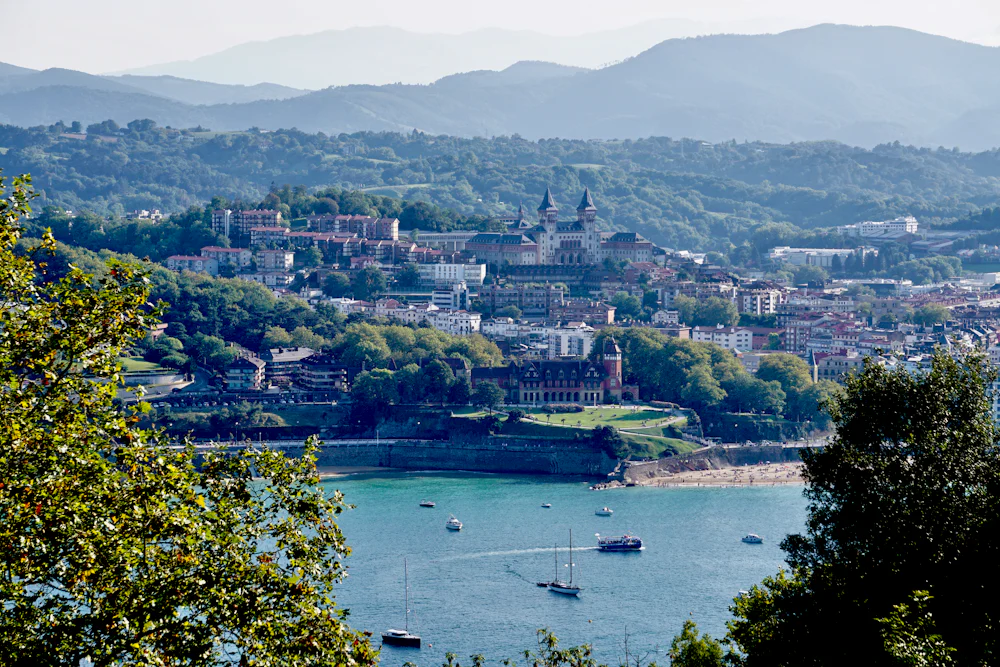
San Sebastián (Donostia in Basque) sits on a scallop-shaped bay so perfect it looks designed, wedged into the far northeast corner of Spain almost at the French border. But the real trip is bigger than the city — it’s the whole Basque coast, from the cider houses inland to the dramatic flysch cliffs of Zumaia, the surf town of Mundaka, and the fishing villages that look like they were built specifically to be photographed at golden hour. This guide covers six days, built around one incredible home base with day trips radiating out from it, plus the logistics — airport, trains, whether you need a car — that most guides skip past.
Why the Basque Coast Belongs on Your Spain Itinerary
Most first-time visitors to Spain do Madrid, Barcelona, maybe Seville, and never make it up to the north. That’s a mistake, and it’s one I made myself on my first two trips to Spain before a Basque friend finally shamed me into fixing it. The Basque Country is culturally and linguistically distinct from the rest of Spain — Euskara, the Basque language, isn’t related to any other language on Earth, and the food culture here is arguably the most sophisticated in the country, with more Michelin stars per capita than almost anywhere else. Add in genuinely dramatic Atlantic coastline, excellent surf breaks, and quiet green hills dotted with cider houses, and you’ve got a region that rewards a full week far more than a single overnight stop between bigger cities.
Getting There: Which Airport or Station to Use
You have three realistic options, and which one makes sense depends on where you’re flying from.
- San Sebastián Airport (EAS) in Hondarribia is the closest, but it only handles a small number of routes, mostly domestic Spanish connections and a few seasonal European links. It’s about a 20-minute drive or taxi into the city centre.
- Bilbao Airport (BIO) is the better-connected option for most international travellers, with far more routes from major European cities. From Bilbao, it’s roughly an hour and 40 minutes to San Sebastián by direct bus (the PESA company runs a frequent, comfortable service — check schedules and book via PESA’s official site) or about the same by car via the AP-8 motorway.
- Biarritz Airport (BIQ), just across the French border, is another strong option if you’re flying from within Europe, especially from France or the UK. It’s a scenic 40-minute drive down the coast into San Sebastián, crossing from France into Spain almost without noticing.
My honest recommendation: fly into Bilbao if you have international options there, since it has the widest range of connections, and take the direct bus to San Sebastián — it’s comfortable, cheap, and drops you close to the centre. If you’re coming from within France or want to start with a scenic coastal drive, Biarritz is a lovely alternative. You can compare all these routing options quickly on Rome2Rio before booking flights.
If you’re already in Spain, San Sebastián also has excellent rail connections — the Renfe network connects it to Madrid (around 5 hours) and there are also cross-border SNCF connections toward Bordeaux and Paris, bookable through Renfe or Trainline.
Getting Around: Do You Need a Rental Car?
This is a genuinely two-part answer, and getting it right will save you money and hassle.
For San Sebastián itself: no car needed, and I’d actively avoid one. The city is compact, walkable, and has a good local bus network (DBus) for the few times you don’t want to walk, plus parking in the centre is expensive and scarce. Base yourself in or near the Parte Vieja or Gros neighbourhood and you can walk to almost everything covered in the city days below.
For the wider Basque coast: rent a car, ideally for at least three of your six days. The coastal villages, the flysch cliffs, the cider houses, and Mundaka are all connected by public bus in theory, but the schedules are infrequent and the best viewpoints and coastal roads are simply not reachable without your own wheels. Pick up a rental in San Sebastián on the morning you plan to start your day trips — all major companies have offices in the city centre and at both Bilbao and San Sebastián airports.
A small car is genuinely all you need; the coastal roads here (the GI-3440 and N-634 especially) are winding but well maintained, nothing like the vertiginous single-track roads you’d find in, say, the Douro Valley. Still, budget extra time for the drives — this coastline does not reward rushing, and half the joy is pulling over on a whim.
Day 1: Arrival and La Concha Bay
However you arrive, start gently. Drop your bags, and walk the promenade around La Concha Bay, widely regarded as one of the most beautiful urban beaches in Europe — a perfect curve of golden sand framed by green hills on either side, with the small Isla de Santa Clara sitting in the middle of the bay like it was placed there on purpose.
- Afternoon: Walk the full length of the La Concha promenade from the Miramar Palace end to Ondarreta beach, then continue around the headland toward the base of Monte Igueldo.
- Early evening: Take the historic funicular up Monte Igueldo for a panoramic sunset view over the entire bay — it’s a genuinely lovely, slightly old-fashioned attraction, complete with a small vintage amusement park at the top.
- Evening: Your first pintxos crawl. Head into the Parte Vieja (Old Town) and just start walking — more on the exact bars below, but for night one, keep it loose and follow whichever bar has the best-looking counter.
Day 2: The Old Town, Pintxos Bars, and Monte Urgull
This is the day to properly explore central San Sebastián, on foot, in a loop that takes you from history to seafood to the city’s best viewpoint.
- Morning — Mercado de la Bretxa: Start at this covered market to see where the city’s chefs actually shop — stalls piled with anchovies, txistorra sausage, local cheeses, and the region’s famous green Padrón-style peppers.
- Late morning — Basílica de Santa María del Coro: A short walk into the Old Town proper, this baroque church with its dramatic facade is worth a quick stop before the crowds build.
- Midday — Monte Urgull: Climb this small hill at the edge of the Old Town, topped by the Castillo de la Mota and a huge statue of Christ overlooking the bay. It’s a gentle 20-30 minute walk up shaded paths and gives you the best overview of how the Old Town, the bay, and the harbour all fit together.
- Afternoon — Aquarium and the harbour: Wander the working fishing harbour, where you can still see boats unloading the day’s catch, then continue to the San Sebastián Aquarium if you’re travelling with kids or just love marine life — its underwater tunnel is genuinely well done.
- Evening — The main pintxos crawl: Now the real business of the day begins. Start at La Cuchara de San Telmo for modern, chef-driven pintxos rather than the classic counter style — book or arrive early, it’s tiny and popular. Continue to Ganbara for arguably the best wild mushroom and seafood pintxos in the city. Finish at Borda Berri, legendary for its slow-cooked pork cheek (carrillera) and risotto-like Idiazábal cheese “risotto,” both of which are cooked to order rather than sitting on the counter.
A tip on pintxos crawling: order one or two dishes and a small glass of txakoli (the local slightly sparkling white wine, traditionally poured from height to aerate it) at each stop, then move on. The whole point is variety across four or five bars over a couple of hours, not filling up at the first place you like.
Day 3: Fine Dining and Playa de la Zurriola
San Sebastián has one of the highest concentrations of Michelin stars per capita anywhere in the world, and if your budget allows, this is the city to splurge in.
- Morning: Cross the Kursaal Bridge into the Gros neighbourhood and spend the morning at Playa de la Zurriola, the city’s surf beach, rougher and more Atlantic than the calm La Concha. Watch the surfers, or rent a board yourself if you’re keen — several shops right on the promenade offer lessons and rentals.
- Lunch: Explore Gros’s more relaxed, less touristy pintxos scene — a good antidote if the Old Town felt overwhelming the night before.
- Evening — the splurge: If you’re booking one exceptional meal on this trip, look at Akelarre, Pedro Subijana’s three-Michelin-star restaurant on Monte Igueldo with sweeping ocean views, or Arzak, the legendary Basque institution run by the Arzak family that’s held three stars for decades and essentially defined modern Basque cuisine. Both require booking weeks or months ahead — check the Michelin Guide for current details and reserve directly through each restaurant’s website.
Day 4: Pick Up the Car — The Flysch Cliffs of Zumaia and Getaria
Today you head west along the coast, and this drive alone justifies renting the car.
- Getaria: A small fishing village about 25 minutes from San Sebastián, famous as the birthplace of fashion designer Cristóbal Balenciaga (whose namesake museum, the Balenciaga Museum, is worth an hour if you’re into fashion history) and for its grilled fish restaurants along the harbour, where whole turbot is cooked over open coals right in front of you.
- Zumaia and the Flysch cliffs: A further 10 minutes on, Zumaia sits beside one of the most striking geological formations in Europe — layered rock cliffs called flysch, formed over 60 million years, that look almost architectural from a distance, striped in alternating bands of hard and soft rock. Walk the coastal path from Zumaia’s Itzurun beach for the best views, or book a boat tour along the cliffs, easily arranged through GetYourGuide’s San Sebastián listings.
- Lunch in Zumaia or Zarautz: Zarautz, just before Getaria, has the longest beach in the Basque Country and a lively surf-town feel, good for a casual seafood lunch on the water.
Day 5: Mundaka, Bermeo, and the San Juan de Gaztelugatxe Hike
Push a little further west today into Bizkaia province for two of the most striking sights on the whole coast.
- San Juan de Gaztelugatxe: A tiny hermitage perched on a rocky islet connected to the mainland by a dramatic zigzagging stone bridge and staircase of over 200 steps. It’s become genuinely famous since featuring in Game of Thrones, so go as early as you can — access is now managed with a free but mandatory reservation system in high season, bookable through the Bizkaia provincial tourism site.
- Bermeo: A working fishing port just beyond, worth a stop for lunch and a wander around its harbour, one of the most important fishing fleets on the Basque coast.
- Mundaka: One of the most famous surf towns in Europe, known for its long, perfect left-hand wave that breaks at the mouth of the Urdaibai estuary. Even if you don’t surf, it’s a lovely, low-key village to explore, with good views out over the estuary’s nature reserve.
Day 6: Inland to Cider Country, Then Wind Down
Save your last full day for a completely different side of the Basque Country: the green, hilly cider-producing region just inland from San Sebastián.
- Astigarraga: A short 15-minute drive from the city, this town is the heart of the Basque cider (sagardo) tradition. Book a visit to a traditional sagardotegia (cider house) such as Petritegi, where the ritual involves shouting “txotx!” as cider is poured straight from massive oak barrels, followed by a hearty set menu of cod omelette, grilled steak, and cheese with walnuts and quince.
- Afternoon: Head back into San Sebastián for a slower, final wander — revisit whichever pintxos bar you loved most, or simply sit on La Concha beach with a book and let the trip settle.
- Evening: One last pintxos crawl, this time without a plan — you’ll know the streets by now, and half the fun on your final night is discovering one more bar you missed the first time around.
Practical Tips for Planning Your Trip
- Best time to visit: June and September offer the best balance of warm weather and manageable crowds. July and August are gorgeous but busy and pricier, especially around La Concha. The cider house season traditionally runs January through April, so if txotx is a priority, plan around that window specifically.
- Language: Spanish and Basque (Euskara) are both official languages here; Spanish will get you everywhere, and most people in tourist-facing roles speak some English too.
- Booking ahead: Reserve tables at Arzak or Akelarre months in advance if possible. Popular pintxos bars don’t take reservations, so arriving right at opening (around 7-7:30pm) helps you beat the crush.
- Currency: Euros. Card is widely accepted, though smaller pintxos bars sometimes prefer cash for small orders.
- Journey planning: Use Rome2Rio or Omio to compare bus, train, and driving options between coastal towns if you decide to skip the rental car for part of the trip.
- Parking in the coastal villages: Getaria, Zumaia, and especially the small car park at Gaztelugatxe fill up fast on weekends and in peak summer — arrive before 10am if you want an easy spot, or be prepared to park a short walk further out.
- Reservation system for Gaztelugatxe: During the busiest months, access to the hermitage itself is capped via free timed reservations; check current requirements before you go, since the system has changed a few times in recent years as visitor numbers have grown.
- Connectivity: Mobile coverage is reliable along the whole coast, including on the coastal hiking paths, which makes it easy to navigate the smaller village roads without pre-downloading maps, though I’d still do it as a backup for the more rural cider-country roads.
- Tipping: Not expected in pintxos bars in the way it is at sit-down restaurants elsewhere; rounding up small change is common and appreciated but never required.
- Sunday closures: Some smaller shops and a handful of pintxos bars close on Sunday evenings and Mondays, so plan your must-visit bars accordingly if your trip includes those days.
A Little Culture and History, Because Context Changes Everything
The Basque Country has a fiercely distinct identity within Spain, and it’s worth understanding a little of that before you arrive, because it shapes almost everything you’ll experience — the language on the street signs, the flags on balconies, the pride locals take in their food traditions. Euskara is considered a language isolate, meaning linguists have never conclusively linked it to any other language family on Earth, and it predates the arrival of Indo-European languages in the region by thousands of years. That deep, singular identity is part of why Basque cuisine developed so distinctly too — gastronomic societies called txokos, private members’ clubs where (traditionally) men gather to cook elaborate meals together, have been quietly perfecting recipes and techniques for well over a century, feeding directly into the professional kitchens that now hold so many Michelin stars.
The region’s relationship with the rest of Spain has been complicated at various points in modern history, and you’ll still see political murals and graffiti referencing Basque independence in some towns. As a visitor, none of this needs to complicate your trip, but it’s worth knowing the context rather than being caught off guard by it.
Where to Stay in San Sebastián
- Parte Vieja (Old Town): The most atmospheric and central choice, right in the heart of the pintxos scene. It’s noisy at night, especially on weekends, but you genuinely cannot beat the convenience for this itinerary.
- Gros: A slightly more relaxed, surfy neighbourhood across the river, with its own excellent pintxos bars and easy walking access to both the Old Town and Zurriola beach.
- Centro (around La Concha): More upscale and quieter, with some of the best hotels facing the bay directly, at a price to match.
- Ondarreta: The quiet end of La Concha bay, closer to Monte Igueldo, with a more residential and family-friendly feel — a good option if you want a calmer base and don’t mind a slightly longer walk into the Old Town each evening.
Understanding Pintxos: How to Actually Order Like a Local
Pintxos culture confuses a lot of first-time visitors, so let me save you the awkward fumbling I went through on my first night. Unlike tapas in the rest of Spain, which are often ordered from a menu and brought to your table, pintxos in San Sebastián are largely self-service from the bar counter — you walk in, survey what’s laid out (usually skewered onto bread with a toothpick, hence the name, which means “spike” or “thorn” in Basque), and simply take what you want. At the end, you tell the bartender how many toothpicks you’ve collected, or they’ve been counting, and you pay based on that tally.
The catch is that the best pintxos bars, including several mentioned above, have moved toward a hybrid model where the classic counter items sit alongside cooked-to-order specialities that you need to actually ask for by name — the pork cheek at Borda Berri, for instance, won’t be sitting on the bar, you order it and they bring it out hot. A good rule of thumb: glance at the counter first, but always ask “¿Qué es lo mejor hoy?” (what’s best today) or simply ask what their speciality is, since the best dish in the house often isn’t the one on display.
- Drink pairing: Txakoli (a young, slightly effervescent white wine) is the classic pintxos pairing, traditionally poured from a height of about a foot above the glass to aerate it. A caña (small draft beer) is the other default order.
- Pace: One or two pintxos and one drink per bar, then move on. A proper crawl covers four to six bars in an evening.
- Timing: Spanish dinner hours are late — bars really fill up from around 8:30-9pm onward. Going earlier means better access to the counter but a quieter atmosphere; going later means the full, chaotic energy but more elbowing for space.
- Beyond the Old Town: While the Parte Vieja gets the reputation, Gros and the Centro neighbourhood have excellent, less touristy pintxos bars too, often better value and just as good.
A Deeper Look at the Michelin-Star Landscape
San Sebastián’s outsized culinary reputation isn’t hype — the wider province of Gipuzkoa has one of the highest concentrations of Michelin stars per square kilometre anywhere on the planet, a legacy that traces back to a generation of Basque chefs, most notably Juan Mari Arzak and Pedro Subijana, who in the 1970s and 80s applied French nouvelle cuisine techniques to traditional Basque ingredients and essentially created what’s now called Basque New Cuisine (Nueva Cocina Vasca). That movement’s influence radiates through nearly every serious kitchen in the region today, from the three-star temples down to the humblest pintxos counter experimenting with foams and reductions alongside the classic tortilla de patatas.
Beyond Arzak and Akelarre, a few other names worth knowing if you want to go deeper on the fine-dining side of this trip:
- Mugaritz, just outside San Sebastián in Errenteria, run by chef Andoni Luis Aduriz, consistently ranks among the world’s most experimental restaurants — expect a tasting menu that plays with texture and expectation as much as flavour. Not for a casual night; book well in advance.
- Elkano, in Getaria, specialises almost exclusively in grilled fish and seafood cooked over coals, and is considered by many serious food critics to be among the best seafood restaurants in the world despite its unpretentious setting.
Surfing and Water Activities Along the Coast
If you’re the kind of traveller who needs to be in the water as much as at a restaurant table, the Basque coast delivers there too.
- Playa de la Zurriola, San Sebastián: The city’s main surf beach, with several schools right on the promenade offering lessons for all levels — a good, convenient option if you want to fit a lesson between pintxos crawls.
- Mundaka: One of the best and most famous left-hand river-mouth waves in the world, but genuinely for experienced surfers only — the wave is powerful and the lineup is competitive. Watching from the harbour wall is a great alternative if you’re not confident enough to paddle out.
- Zarautz: The longest beach in the Basque Country and a gentler, more beginner-friendly wave than Mundaka, with plenty of surf schools.
- Coastal walking (Camino del Norte): Sections of the Camino de Santiago’s less-travelled northern route run right along this coastline, and even a short stretch — say, the walk between Zumaia and Deba — gives you a beautiful, quiet taste of Basque coastal hiking away from the road.
Sample Budget for Six Days
The Basque Country is not the cheapest corner of Spain — the food reputation comes at a price — but it’s still good value compared to similarly renowned food destinations elsewhere in Europe.
- Budget traveller: €70-100/day — hostel or budget guesthouse, a handful of pintxos per meal rather than a full crawl, mostly walking and buses.
- Mid-range: €150-230/day — boutique hotel, a proper multi-bar pintxos dinner most nights, one or two paid activities (aquarium, boat tour, surf lesson), rental car for three days.
- Higher-end: €350+/day — includes one or two Michelin-starred dinners (tasting menus at Arzak or Akelarre typically run €200-260 per person before wine), a nicer hotel on or near La Concha, private tours.
Rental cars in the region typically run €40-70/day depending on season; book ahead through the major agencies at Bilbao or San Sebastián airport for the best rates, and note that both flysch cliff villages and Gaztelugatxe get genuinely busy on weekends, so weekday visits are noticeably calmer.
Frequently Asked Questions
Is San Sebastián expensive compared to the rest of Spain?
Yes, noticeably — it’s one of Spain’s pricier cities for dining and accommodation, largely because of its culinary reputation and popularity with both Spanish and international visitors. That said, a good pintxos dinner is still far cheaper than a sit-down restaurant meal of equivalent quality almost anywhere else in Western Europe.
How many days should I spend on the Basque coast?
Four days covers the essentials (two in the city, two on day trips), but six lets you add the cider houses and a slower pace, which this region genuinely rewards. If you only have a weekend, prioritise the city itself and a single day trip to either the flysch cliffs or Gaztelugatxe rather than trying to cram in both.
Do I need to book pintxos bars in advance?
Generally no — most operate on a first-come, first-served counter basis. The exception is sit-down, chef-driven spots like La Cuchara de San Telmo, which are small and popular enough that arriving right at opening or reserving ahead helps.
Can I visit as a day trip from Bilbao instead of staying overnight?
You could, given the roughly 100km distance, but I wouldn’t recommend it — you’d be rushing the pintxos scene, which is really an evening-into-night experience, and you’d miss the coastal day trips entirely. This is a stay-and-explore destination, not a drive-by.
What to Pack
- Layers. The Basque coast has a genuinely changeable Atlantic climate — sunny mornings can turn misty and cool by the coast within a couple of hours, even in summer.
- A light rain jacket. This is a green, damp corner of Spain for a reason; showers are common outside of peak summer.
- Sturdy shoes for the Gaztelugatxe steps and coastal paths. Flip-flops will not serve you well on the flysch cliff walks or the 200-plus steps to the hermitage.
- An appetite. Genuinely — pace yourself on day one so you have room to properly enjoy the bigger crawls later in the trip.
Optional Extension: Hondarribia and the French Border
If you have a seventh day, or you’re flying home from Biarritz anyway, tack on a half-day in Hondarribia, a colourful fishing town right on the Bidasoa River that marks the Spanish-French border. Its old town is full of brightly painted balconied houses, and the Parador — a historic hotel set in a medieval castle where Spanish and French royalty once negotiated — is worth a wander even if you’re not staying there. From Hondarribia, you can cross the small ferry over the river to the French town of Hendaye, giving you a two-country afternoon and a good final stop before heading to Biarritz airport or continuing north into France.
How This Trip Connects to the Rest of France and Spain
One of the things I love most about basing a trip here is how naturally it connects onward. If you’re continuing the Iberia leg of a longer trip, San Sebastián is a natural jumping-off point south toward Rioja wine country (about 90 minutes by car), or east along the coast toward the French Basque towns of Biarritz and Saint-Jean-de-Luz, both easily reached by the local TER cross-border trains or a short drive. If you’re heading further into France afterward, the coastal road toward Bordeaux via Bayonne is a lovely, unhurried continuation of the same Atlantic coastline theme, and it means you don’t have to backtrack the way you came. I’ve done this exact extension myself — San Sebastián into Biarritz into the Landes pine forests toward Bordeaux — and it makes for one of the most underrated stretches of coastal road tripping in Western Europe, criminally overlooked by travellers who fixate only on the French Riviera further south.
A Note on Basque Villages Beyond the Coast
If the itinerary above has you craving even more green hills and stone villages, it’s worth knowing that inland Gipuzkoa and Navarre hide some genuinely beautiful Basque towns that rarely make it onto a standard itinerary. Hondarribia aside, towns like Elizondo in the Baztan Valley (about an hour and a half south) offer a completely different, mountainous, forested version of the Basque Country — think river-crossed stone bridges, slate-roofed farmhouses, and some of the best lamb and trout dishes in the region. It’s a worthwhile detour if you’re extending this trip into a longer loop through Navarre, though it’s a step beyond what a focused coastal itinerary like this one needs to cover.
Final Thoughts on Timing Your Crawl
One thing that took me embarrassingly long to work out: San Sebastián’s pintxos bars each have their own personality depending on the night of the week. Midweek evenings are noticeably calmer and give you far better access to the counter and a proper conversation with the bartender, who’s often happy to talk you through what’s fresh that day if things aren’t slammed. Weekends, particularly Friday and Saturday nights, are loud, packed, and genuinely fun in a completely different way — more elbow-to-elbow, more spontaneous conversation with strangers, more of a sense that the entire city has turned out for the same ritual. Neither is wrong, but if you’re someone who wants to actually taste and appreciate each dish rather than just survive the crush, weight your itinerary so your most-anticipated bars fall on a Tuesday or Wednesday rather than a Saturday.
Why This Trip Stays With You
I’ve eaten my way through a fair number of food cities on this long, meandering trip through Europe, but San Sebastián does something few other places manage: it makes eating feel like the main event of the day, not a break between sightseeing. You plan your walks around when the bars open. You choose a viewpoint based on which pintxos bar is closest afterward. And somewhere between the flysch cliffs of Zumaia, the steps up to Gaztelugatxe, and one too many glasses of txakoli poured from height in a crowded bar on Calle 31 de Agosto, you understand exactly why this small, scallop-shaped bay has such an outsized reputation. Land in Bilbao, take the bus over, and give this coast the better part of a week — it will not be the last time you think about it.
I want to be upfront that this itinerary asks you to slow down in a way that surprises some travellers used to city-hopping through Europe. San Sebastián rewards repetition, more than it rewards constant novelty: the same beach walk at different times of day, the same bar revisited because you’re craving one specific pintxo again, the same viewpoint at a different tide. If you come in with a checklist mentality, treating each stop above as a box to tick, you’ll still have a good trip, because the region is that strong on fundamentals. But if you come in willing to let an evening stretch long over small plates and conversation with a stranger at the next stool, or to sit on Monte Urgull for twenty extra minutes just watching the fishing boats come in, you’ll have a genuinely great one. That’s the difference this coast is built around, and it’s the single biggest piece of advice I can give anyone planning to follow this route: build in slack, and don’t be afraid to let the pintxos bars decide your evening for you rather than the other way around.