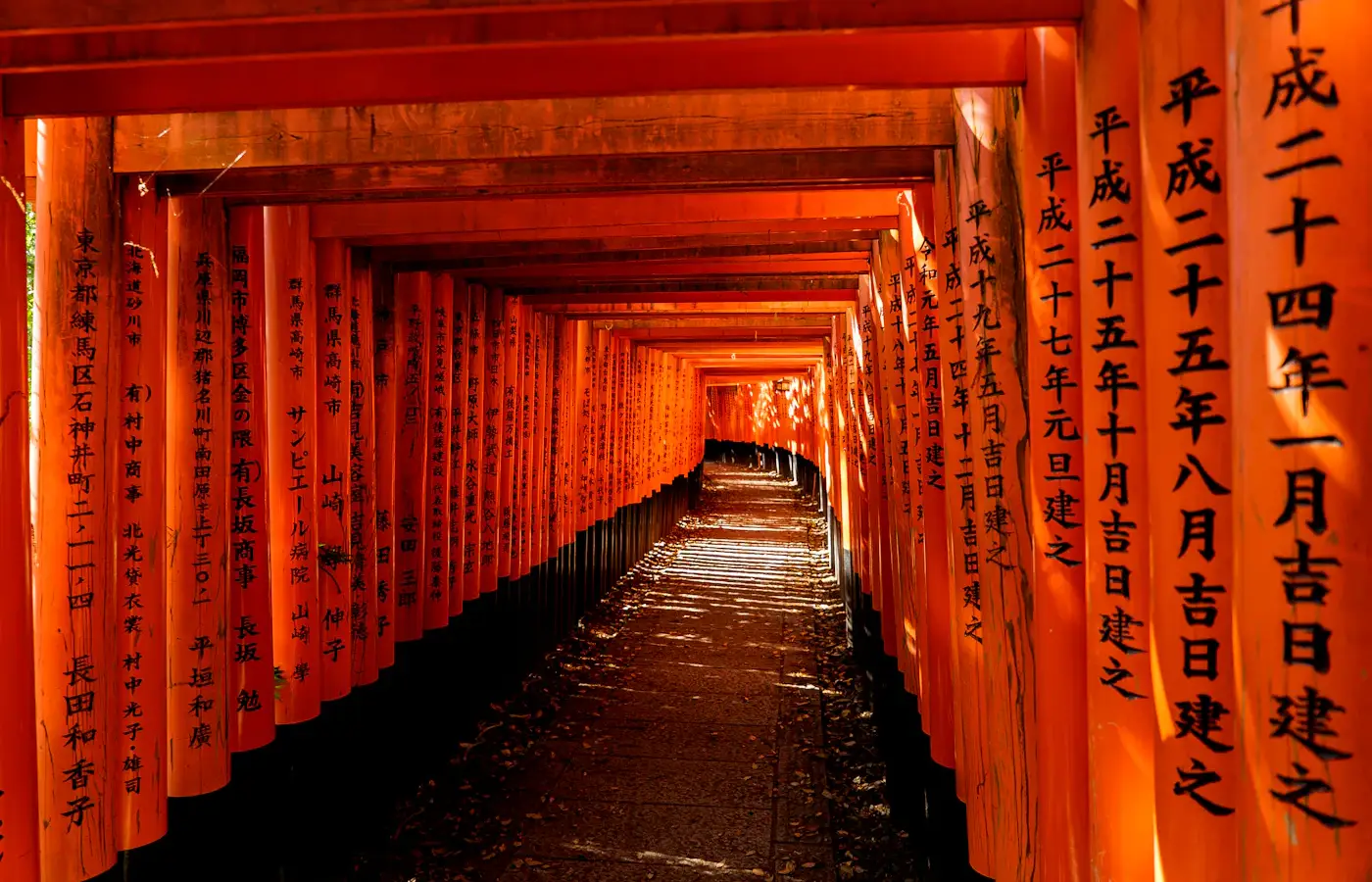
A Kyoto itinerary guide has to start with Fushimi Inari Taisha, because nothing else on this trip prepared me for what several thousand vermilion torii gates look like stacked up a mountainside at six in the morning with almost nobody else on the path. It’s the single most photographed sight in the city, but I’d landed there expecting a quick postcard stop and left three hours later, sweaty and completely sold on Kyoto as a place worth building an entire route around, not just a day trip from Osaka.
Getting There: Which Airport or Station to Land At
Kyoto has no international airport of its own, which trips up a lot of first-time visitors. The two realistic entry points are Kansai International Airport (KIX) near Osaka, and Kyoto Station itself if you’re arriving overland on the Shinkansen from Tokyo, Osaka or further afield.
- Flying internationally: land at KIX and take the JR Haruka Express direct to Kyoto Station, a comfortable 75-minute ride with reserved seating. It’s the route I used, and it beats the airport bus once you factor in Kyoto’s traffic.
- Coming from Tokyo: the Tokaido Shinkansen gets you from Tokyo Station to Kyoto Station in about two hours fifteen, and it’s worth timing the trip around a JR Pass if you’re covering more than one city.
- Coming from Osaka: a regular JR line or the Hankyu/Keihan private railways both take 30-45 minutes and are cheap enough that a taxi never makes sense.
Either way, everything converges on Kyoto Station, which is really the only sensible base for figuring out the rest of the city.
Getting Around Kyoto: Skip the Rental Car
I’ll be honest about this one because I see people talk themselves into a rental car for Kyoto and regret it: don’t. The old city center is a dense grid of narrow streets, one-way restrictions and parking lots that fill up before 9am near anything worth seeing. Fushimi Inari, Kiyomizu-dera and Arashiyama all have limited or paid parking that turns into a real headache on weekends and during cherry blossom or autumn foliage season.
Kyoto’s bus and rail network, by contrast, is built for exactly this kind of sightseeing. I bought an ICOCA IC card at Kyoto Station on arrival and tapped it on every bus, subway and JR/private rail line for the rest of the trip, no tickets, no change fumbling. A one-day bus pass is worth it on days when you’re hopping between three or four temples in the Higashiyama or Arashiyama districts; otherwise the IC card alone is cheaper. The only exception where a car earns its keep is a side trip out to rural Kyoto Prefecture or the Sea of Japan coast, well outside what this guide covers.
Kyoto Itinerary Guide: Where to Go, in Order
This is the order I’d actually do it in again, front-loading the places that get overwhelmed by midday crowds.
- Fushimi Inari Taisha, first thing in the morning. Arrive by 7am if you can. The lower gates near the entrance are the busy postcard shot, but climbing 20-30 minutes further up past the Yotsutsuji intersection thins the crowds out almost completely and the views back over Kyoto are worth the climb alone.
- Kiyomizu-dera and the Higashiyama district, late morning. Take the bus or a short taxi from Fushimi Inari up to Kiyomizu-dera’s wooden stage, then walk down through Ninenzaka and Sannenzaka, the preserved lanes of traditional shops and teahouses that connect it to Gion.
- Gion and lunch, early afternoon. Gion is Kyoto’s historic geisha district; wander Hanamikoji Street and, if you’re lucky, you’ll spot a geiko or maiko heading to an appointment in the early evening instead. This is also where I had my best meal of the trip.
- Nishiki Market, mid-afternoon. A covered arcade of food stalls a short walk north of Gion, good for grazing on skewered wagyu, fresh yuba and tsukemono rather than sitting down for a full meal.
- Kinkaku-ji (the Golden Pavilion), late afternoon. On the opposite side of the city, so plan this as its own bus ride rather than squeezing it in between other stops. The gold-leaf pavilion reflected in its pond is exactly as striking as the photos, even with a crowd.
- Arashiyama Bamboo Grove and Tenryu-ji, save for a separate morning. Arashiyama deserves its own half-day, ideally early, before the tour groups arrive at the bamboo path. Tenryu-ji’s garden right next to it is a UNESCO World Heritage Site and far less crowded than the grove itself.
Where I Ate, and Where to Look for More
Gion’s back streets hide some of the best small kaiseki and yakitori counters in the city, and I’d rather point you to sources that update their listings than pretend my three-week itinerary makes me an expert on Kyoto’s restaurant scene. For anything Michelin-starred, the Michelin Guide Kyoto is the most reliable current list, and it’s how I found the counter-seat tempura spot near Kawaramachi that ended up being the single best meal of the whole trip. For general planning and up-to-date opening hours across the city, the official Kyoto City Tourism site is worth a bookmark before you go.
For more background on Fushimi Inari itself, including the history of the torii gate donations that built the trail, see Japan Guide’s Fushimi Inari Shrine page, one of the most thorough independent resources on the shrine.
Booking Tickets and Tours
Fushimi Inari itself is free with no ticket required, which is part of why it works so well as an early-morning stop. For everything else on this list, I’d book ahead rather than queue on the day:
- GetYourGuide’s Kyoto page for guided walking tours of Gion and Higashiyama, and skip-the-line options for the busier sights.
- Viator’s Kyoto listings for half-day Arashiyama and bamboo grove tours that bundle in Tenryu-ji and a river cruise.
- The official Kinkaku-ji temple site for current admission prices and hours, since these do shift seasonally.
- SmartEX or JRPass.com for booking Shinkansen seats to and from Kyoto ahead of time, especially in cherry blossom and autumn foliage season when trains sell out.
Practical Tips From the Trip
- Timing: I went in early November for the tail end of autumn foliage, and mornings before 8am at Fushimi Inari and Arashiyama made the difference between empty paths and shoulder-to-shoulder crowds. Cherry blossom season (late March to early April) is even busier; book accommodation months ahead if you’re coming then.
- Money: Kyoto is more card-friendly than it used to be, but I still carried cash for temple entry fees, small food stalls in Nishiki Market and the older shops around Gion that still don’t take cards.
- Packing: Comfortable walking shoes matter more here than almost anywhere else I’ve traveled; the Fushimi Inari climb and the Higashiyama stone lanes are both uneven underfoot. I also packed a light rain shell, since Kyoto’s weather turns quickly even outside the official rainy season.
- Weather: Summers are hot and genuinely humid, which made the early-morning strategy less optional and more essential; autumn (November) and spring (late March-April) are the most comfortable windows, with winter offering the thinnest crowds if you don’t mind the cold.
Browse the rest of our destination guides for other routes we’ve mapped out, and check the guides page for updates as this one gets revisited.
Photo by David Emrich on Unsplash.