
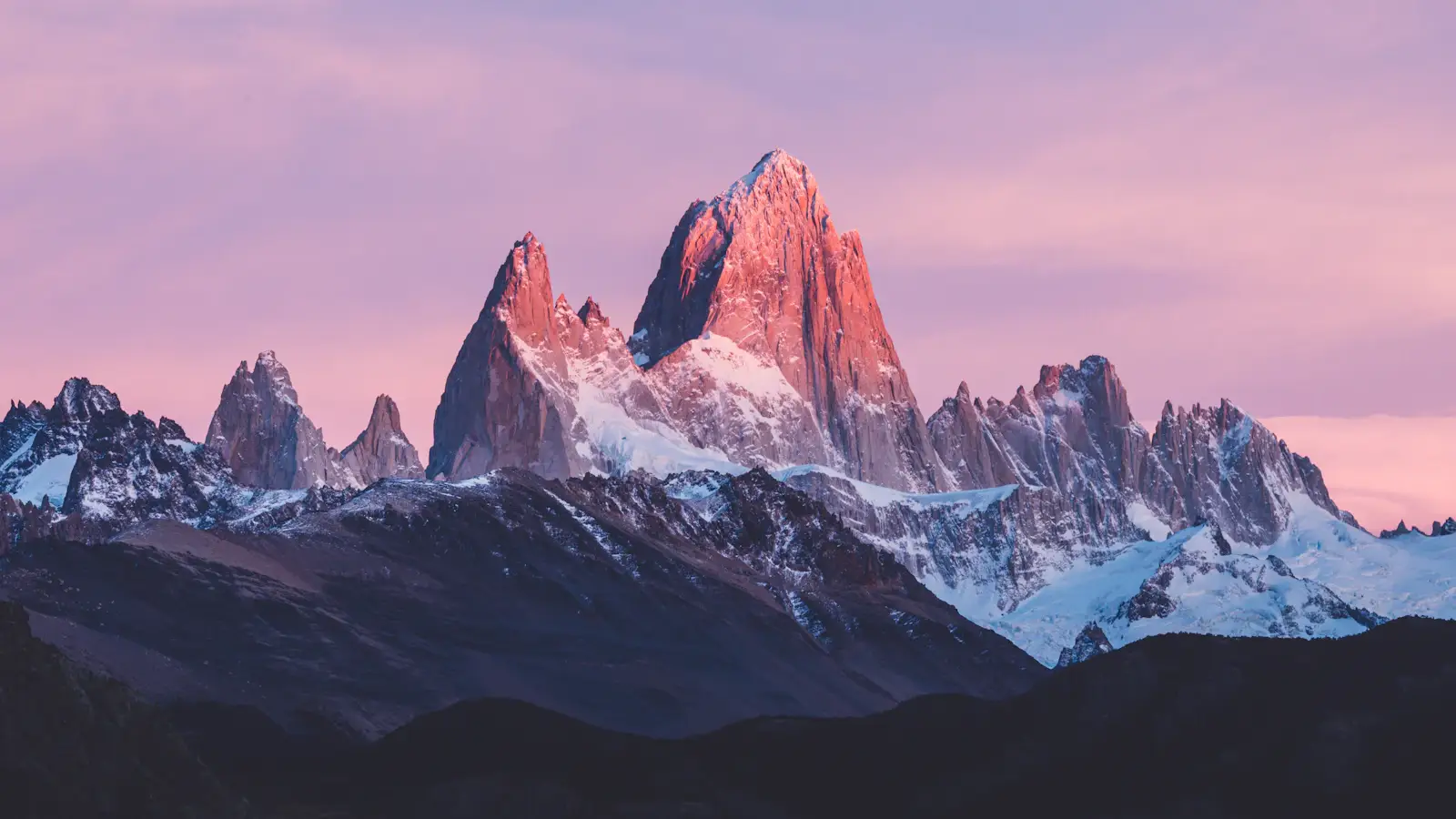
There’s a road sign on the way into El Chaltén that just says “Capital Nacional del Trekking” — national trekking capital — and I remember laughing a little when I first saw it, the way you laugh at any town that names itself something so grand. Then Mount Fitz Roy came into view through the windshield, a jagged wall of granite spearing straight up out of the Patagonian steppe with absolutely no foothills or gentle buildup to soften the reveal, and I stopped laughing and just pulled the van over on the side of the road like everyone else was doing. I’ve spent a huge chunk of my life on the road chasing views like this, and El Chaltén might be the single spot in South America where the payoff-to-effort ratio is the most absurd — genuinely world-class, free-to-access hiking trails that start right from town, no permits, no timed entry tickets, no long treks required to see the good stuff. This is everything I’ve learned from two visits here, laid out so you can plan your own trip through Argentine Patagonia properly.
Before we get into the logistics, a bit of context on why this particular corner of Patagonia feels so different from its Chilean neighbor across the border. El Chaltén sits within Los Glaciares National Park, a UNESCO World Heritage site named for the massive Southern Patagonian Ice Field that feeds dozens of glaciers down into this region, including the famous Perito Moreno. But unlike Torres del Paine, where the granite towers sit somewhat inland from the main road network, Fitz Roy and Cerro Torre rise almost directly behind the town itself — there’s essentially no buffer zone, no long approach drive, just steppe, then forest, then suddenly a wall of vertical granite. That geographic quirk is the whole reason this town built its identity so thoroughly around free, accessible trekking, and it’s what makes El Chaltén feel less like a national park you visit and more like a trailhead you happen to also sleep in.
Quick Trip Snapshot
- Best arrival airport: El Calafate (FTE) — Comandante Armando Tola International Airport — is the real gateway; El Chaltén itself has no commercial airport.
- Gateway town: El Calafate, about 3 hours south of El Chaltén by road, also home to the Perito Moreno Glacier.
- Best time to go: November through March (Southern Hemisphere spring/summer), with December-February peak, and shoulder months offering fewer crowds and often calmer wind.
- Ideal trip length: 4-5 days in El Chaltén alone is enough to hit the major trails; combine with 2 days in El Calafate for the glacier, for a 6-7 day Argentine Patagonia trip, or bolt it onto a Torres del Paine trip in Chile for a fuller 10-14 day Patagonia circuit.
- Transport verdict: You do not need a rental car in El Chaltén itself — the trails start from town and it’s entirely walkable. But a rental car (or at minimum a bus) is necessary to get there from El Calafate, and having your own vehicle for that leg gives you flexibility to stop at viewpoints along the way.
Getting There: Which Airport to Fly Into
El Chaltén has no airport of its own — the nearest and by far the best option is Comandante Armando Tola International Airport (FTE) in El Calafate, about 220 km (135 miles) south. This airport is well connected with regular domestic flights from Buenos Aires on Aerolíneas Argentinas and JetSMART Argentina, plus seasonal routes from other Argentine cities.
Most international travelers will fly into Buenos Aires first — either Ministro Pistarini International Airport (EZE) for international arrivals or Aeroparque Jorge Newbery (AEP) if you’re connecting domestically within Argentina — then catch a roughly 3-hour domestic flight down to El Calafate. Book the domestic leg as early as you can for summer travel; seats on the El Calafate route get tight and pricey in December and January.
An alternative, less common route: some travelers combine this trip with Torres del Paine in Chile and fly into Punta Arenas, then cross overland via Puerto Natales to El Calafate and onward to El Chaltén, or vice versa. I covered that route in detail in my Torres del Paine guide — it’s a fantastic way to see both sides of Patagonia in one trip if you have 10+ days.
From El Calafate Airport to El Chaltén
Once you land at FTE, you have essentially three ways to make the roughly 3-hour drive north to El Chaltén along Ruta 40 and Ruta 23:
- Rent a car at the airport. Companies like Hertz Argentina, Localiza, and other local operators have desks at FTE. This is genuinely the best option if your budget allows — the drive along Ruta 40 is stunning, with wide-open steppe, occasional guanaco herds, and increasingly dramatic mountain views as you approach El Chaltén, and it lets you stop at pullouts for photos whenever the mood strikes.
- Book a direct bus. Companies like Chaltén Travel and Taqsa/Marga Taqsa run several daily direct coach services from El Calafate to El Chaltén, timed to connect roughly with flight arrivals in high season. Book through Rome2rio to compare current schedules and operators.
- Private transfer. Some hotels in El Chaltén will arrange a private transfer, useful if you’re arriving very early or late and don’t want to wait for a scheduled departure.
Do You Need a Rental Car?
Here’s the nuanced answer for this particular trip. Once you’re actually in El Chaltén, you do not need a car — this is one of the rare hiking towns where literally every major trail (Laguna de los Tres, Laguna Torre, Mirador de los Cóndores, Chorrillo del Salto) starts directly from the town itself or a very short walk from it. There’s no driving between trailheads the way there often is in other national parks.
Where a rental car earns its keep is the journey between El Calafate and El Chaltén, and any side trips around El Calafate itself (particularly to the Perito Moreno Glacier if you want flexibility on timing rather than being locked into a group tour bus schedule). Having your own vehicle for that stretch means you can:
- Stop at scenic pullouts along Ruta 40 for photos of the steppe and your first distant views of Fitz Roy and Cerro Torre as they come into view.
- Visit Lago Argentino viewpoints and the town of El Calafate’s lakefront at your own pace.
- Control your own schedule for the Perito Moreno Glacier visit, arriving early to beat tour bus crowds to the boardwalk viewpoints.
If you’re not driving, the bus network here is genuinely excellent and reliable by South American standards, so don’t feel like you’re missing out if you’d rather not deal with a rental — plenty of travelers do this entire trip by bus and have a wonderful time.
When to Go
- December–February (peak summer): Warmest, longest days (up to 17 hours of daylight, meaning you can start a big hike at 6am in full daylight), busiest trails and accommodation, so book lodging ahead.
- November and March (shoulder season): My preferred window here too, same as Torres del Paine — thinner crowds, still-solid weather, and in March the lenga forest turns brilliant shades of red and gold, which is genuinely one of the best times to photograph these trails.
- April–October (off-season): Many services in town close down, weather turns harsher and more unpredictable, and some trails become genuinely difficult or dangerous without proper winter mountaineering experience. Not recommended for most travelers.
One thing that makes El Chaltén special versus Chilean Patagonia: the town itself sits low enough and close enough to the trailheads that even a fairly average hiking day can deliver a huge payoff without multi-day backpacking. That said, the wind here is every bit as fierce as in Torres del Paine — pack the same way: proper waterproof windproof shell, layers, and don’t underestimate how quickly weather changes.
The Step-by-Step Itinerary: How to Hike El Chaltén in the Right Order
Here’s the sequence I’d recommend for a 5-day stay in El Chaltén, which gives you time for the two headline hikes plus a couple of easier ones and a weather buffer day (genuinely essential here, since Patagonian weather can close out a summit view with little warning).
Day 1: Arrive, Easy Acclimatization Walk
- Arrive in El Chaltén via car, bus, or transfer from El Calafate and check into your accommodation.
- Stop at the Los Glaciares National Park visitor center right at the entrance to town — it’s free to enter the park (a rarity, and a real point of pride for the town) but rangers here give an excellent rundown of current trail conditions and weather forecasts, which change fast enough here that it’s worth checking daily.
- Do the short, easy Chorrillo del Salto trail, about a 4 km round trip walk through lenga forest to a pretty waterfall — a nice, low-effort way to stretch your legs after travel and get a first taste of the landscape.
- For dinner, head to La Tapera, a cozy, unpretentious spot serving hearty Patagonian dishes and good local Malbec, perfect for planning the next day’s hike over a map.
Day 2: Laguna de los Tres — The Fitz Roy Hike
This is the big one, the hike everyone comes here for, and honestly one of the best day hikes I’ve ever done anywhere in the world.
- The trailhead starts right from town at the northern end of El Chaltén (Camping Madsen trailhead) — no shuttle or transfer needed.
- The full round trip is about 20-22 km (12-13.5 miles) and takes 8-10 hours depending on pace and how long you linger at the top.
- Start as early as you can, ideally around sunrise. Not just for the light, but because Fitz Roy has a well-earned reputation for clouding over by midday, and an early start dramatically improves your odds of an unobstructed summit view.
- The trail climbs gently through forest for the first two-thirds, passing the excellent Mirador de las Águilas and Mirador Fitz Roy viewpoints along the way — worth the short detours.
- The final hour is a genuinely steep, rocky ascent up a moraine to Laguna de los Tres, a glacial lake sitting directly beneath the vertical granite spire of Fitz Roy. This last push is tough on the legs but short, and the view at the top — the lake, the glacier feeding it, and the sheer granite wall rising straight up behind — is one of the most rewarding payoffs of any hike I’ve done.
- Descend the same way, ideally stopping at Campamento Poincenot for a rest and water refill on the way down.
Day 3: Laguna Torre — Cerro Torre Views
The second headline hike, focused on the equally dramatic but very differently shaped Cerro Torre, a slender ice-capped granite needle that’s considered one of the hardest technical climbs in the world.
- Trailhead starts from the western edge of town, again with no transfer needed.
- Round trip is about 18 km (11 miles), somewhat gentler overall than the Fitz Roy hike, taking around 7-8 hours.
- The trail follows the Río Fitz Roy valley with steadily improving views of Cerro Torre’s distinctive spire, usually capped with its famous “mushroom” of rime ice near the summit.
- At Laguna Torre, you’re rewarded with a glacial lake often dotted with small icebergs calved from the Glaciar Grande (Torre Glacier) at its far end, with Cerro Torre towering directly above.
- For an extended version with even better views, continue to the Mirador Maestri viewpoint a bit further along the lakeshore.
Day 4: Weather Buffer Day / Mirador de los Cóndores and Town Exploration
I always build in a flex day here, because Patagonian weather really can shut down summit views for a day or two at a time, and you don’t want your one shot at Fitz Roy to coincide with a cloud bank.
- If weather cooperated on Days 2 and 3, use this day for the shorter, easier Mirador de los Cóndores and Mirador de las Águilas loop, a gentle 4 km round trip right from town with sweeping views over the whole valley — a nice low-key finish to your hiking days.
- If weather didn’t cooperate earlier, use this as your buffer to re-attempt Laguna de los Tres or Laguna Torre.
- Spend the afternoon wandering El Chaltén’s compact main street, browsing the outdoor gear shops and grabbing a coffee at one of the town’s excellent small cafes.
- Treat yourself to dinner at La Cervecería, a beloved local craft brewpub serving hearty stews and pizza alongside their own beer — an absolute institution among trekkers passing through town.
Why Perito Moreno Glacier Deserves Its Own Full Day
If your schedule allows, I’d actually recommend splitting the El Calafate portion of this trip into two days rather than treating Perito Moreno as a single rushed stop on your way to the airport. Here’s why: this is one of only a handful of glaciers on Earth that is still advancing rather than retreating, a genuinely rare phenomenon caused by the specific balance of snowfall accumulation in the ice field above it versus the rate of ice loss at its face. That means it puts on a real show — chunks of ice the size of buildings periodically calve off the 60-meter face with a sound like a gunshot followed by a deep boom, sending waves rippling across Lago Argentino. Watching this happen from the boardwalks, ideally with a coffee in hand and no particular schedule pressing on you, is one of those travel experiences that’s genuinely worth slowing down for rather than squeezing into a half-day layover. If you can add a sixth day to this itinerary, spend it entirely at Perito Moreno, perhaps combined with the ice trekking excursion mentioned above, and treat your El Calafate evening as a proper rest day before flying out.
Day 5: Transfer to El Calafate, Perito Moreno Glacier
Before heading to your onward flight, don’t skip the Perito Moreno Glacier — it’s one of the very few advancing glaciers left in the world and genuinely one of the most impressive natural sights in South America.
- Drive or bus back to El Calafate (about 3 hours).
- Head straight to Los Glaciares National Park’s Perito Moreno sector, about an hour from El Calafate town. Entrance tickets can be pre-booked or bought at the gate; check current details via the official Argentina National Parks Administration site.
- Walk the extensive boardwalk system that lets you view the glacier’s 5-km-wide, 60-meter-tall ice face from multiple angles at a genuinely safe distance while still being close enough to hear (and if you’re lucky, see) huge chunks calving off into Lago Argentino with a crack like thunder.
- For an even closer experience, book a boat tour that cruises right up to the glacier face, or a guided ice-trekking excursion on the glacier itself, both bookable through GetYourGuide or Viator.
- Return to El Calafate for the evening, with dinner at Pura Vida, a well-loved local spot serving Patagonian lamb stew and other hearty regional classics in a warm, home-style setting.
Extending Your Hikes: Multi-Day Options
If you’ve got extra time and want to go beyond the classic day hikes, El Chaltén also serves as the base for a longer traverse that links both major viewpoints into a single overnight trip.
- The Fitz Roy–Cerro Torre traverse: An experienced hiker can combine both valleys into a two- or three-day loop, overnighting at Campamento Poincenot or De Agostini and connecting via the Paso del Cuadrado, a higher, more exposed route that requires good weather, proper gear, and route-finding confidence.
- Loma del Pliegue Tumbado: A quieter, less-trafficked full-day hike offering a genuinely different panoramic perspective, looking across at both Fitz Roy and Cerro Torre simultaneously from a single vantage point, plus views south toward the Viedma Glacier and Lago Viedma.
- Glaciar Viedma boat and ice trekking excursions: Bookable through operators in El Chaltén, these trips get you out onto Lago Viedma and, in some cases, onto the glacier itself for guided ice trekking — a good option if you want a different kind of adventure beyond hiking.
For any of these more ambitious routes, I’d strongly recommend checking in with the national park rangers at the visitor center beforehand — they track current conditions closely and will tell you honestly if a route isn’t advisable given the week’s forecast.
Where to Stay
- In El Chaltén: The town is small and entirely walkable, so location matters less than in bigger destinations — anywhere in the compact center puts you within a few minutes of both major trailheads. Options range from simple hostels to comfortable mid-range lodges; I’d recommend booking well ahead for December-February.
- Free backcountry camping: If you want to extend the Fitz Roy or Cerro Torre hikes into overnight trips, Campamento Poincenot (near Laguna de los Tres) and Campamento Bridwell/De Agostini (near Laguna Torre) are free, no-permit-required campsites within the national park — a genuinely rare and wonderful policy that reflects the whole ethos of this park being kept accessible.
- In El Calafate: Stay near the lakefront (Av. del Libertador General San Martín) for easy access to restaurants and the bus terminal.
Combining With Torres del Paine, Chile
If you have 10-14 days, this pairs beautifully with a Chilean Patagonia leg. From El Calafate, buses run to Puerto Natales (gateway to Torres del Paine) via the border crossing, a journey of around 5-6 hours including the crossing itself. I covered Torres del Paine in full detail in a separate guide on this blog — between the two, you get an incredible cross-section of what Patagonia has to offer, from Chile’s iconic granite towers to Argentina’s equally iconic Fitz Roy massif and the extraordinary Perito Moreno Glacier.
Navigating El Chaltén and the Trailheads
El Chaltén is small enough that navigation confusion is rare, but here’s the practical layout:
- The town sits along a single main street, Avenida San Martín, with the national park visitor center at the northern entrance as you arrive from El Calafate — stop here first, every time, since posted trail conditions change daily.
- The Laguna de los Tres / Fitz Roy trailhead starts from the northern end of town near the Camping Madsen area, a short walk from most in-town accommodation.
- The Laguna Torre trailhead starts from the western edge of town, an equally short walk, meaning you genuinely never need a taxi or shuttle to reach either headline hike.
- Trail junctions are well-signed with wooden markers showing distances and estimated times, and the park’s popularity means the paths themselves are well-trodden and easy to follow even without GPS.
- That said, download an offline map (the free Maps.me app works well here, and the park visitor center sometimes has paper trail maps available) since mobile signal disappears almost entirely once you’re more than a kilometer or two out of town.
- If weather closes in suddenly, which happens here more than most places, the safest move is simply to turn back the way you came rather than press on hoping it clears — the trails are well-marked enough that retracing your steps is straightforward even in reduced visibility.
Practical Tips I Wish I’d Known Sooner
- Check trail conditions daily at the visitor center. Patagonian weather changes fast, and rangers here give genuinely useful, current advice on which trails have the best forecast for a given day.
- Start big hikes early, ideally before or right at sunrise, both for the light and to beat the midday cloud buildup that often obscures the peaks.
- Bring cash. El Chaltén is a small town and not every business reliably takes cards; ATMs can also run out of cash during peak season.
- Layer up, always. Even a warm, clear morning can turn into a windy, freezing afternoon at higher elevations on these trails.
- Refill water from the streams, just like in Chilean Patagonia — the glacial meltwater here is clean and it means you don’t need to carry heavy water loads on the longer hikes.
- Book your El Calafate–El Chaltén transport and accommodation ahead for December-February, even though this region feels less bureaucratically locked-down than Torres del Paine — the town is small and does sell out.
What to Pack for El Chaltén
- A genuinely windproof, waterproof hardshell. Same rule as Chilean Patagonia — the wind here is a constant, physical presence on the trail, especially on exposed ridgelines near Laguna de los Tres.
- A warm insulating mid-layer, since even summer days can turn sharply cold once you gain elevation or the wind picks up.
- Sturdy hiking boots or well broken-in trail runners — the final ascents to both Laguna de los Tres and Laguna Torre involve loose rock and moraine scrambling.
- Trekking poles, particularly useful for the steep final climb up to Laguna de los Tres and the descent afterward.
- Sunglasses and high-SPF sunscreen — the sun at this latitude and elevation is stronger than it feels.
- A reusable water bottle, since you’ll refill constantly from the clean glacial streams that cross both major trails.
- A headlamp, genuinely useful if you’re starting the Fitz Roy hike before sunrise, which I’d recommend for the best odds of clear summit views.
- Cash in Argentine pesos, since card acceptance in this small town can be inconsistent, especially outside peak season.
Budget Breakdown
El Chaltén is one of the more budget-friendly headline destinations in Patagonia, largely because the park itself charges no entrance fee and the best hikes require no guide, permit, or transport beyond your own two feet.
- Budget backpacker: Free trails, free backcountry camping at Poincenot and De Agostini, hostel dorms in town, and self-catered meals from the town’s small grocery stores. This is a genuinely excellent destination for stretching a tight travel budget while still getting a world-class experience.
- Mid-range: Comfortable guesthouse or lodge accommodation, restaurant meals at spots like La Tapera and La Cervecería, and a rental car or private transfer for the El Calafate connection.
- Luxury: A handful of higher-end lodges in and around El Chaltén offer guided hikes, gourmet meals, and excellent mountain views from the room, worth considering for at least part of your stay.
- Biggest cost variable: the El Calafate–El Chaltén transport leg and whether you add glacier boat tours or ice trekking excursions at Perito Moreno, which run noticeably higher than the free hiking in El Chaltén itself.
Argentine Patagonian Food and Culture
- Asado: Argentina’s iconic slow-grilled barbecue, and in Patagonia specifically often built around lamb (cordero) cooked whole over an open cross-fire, similar to the Chilean version but with its own regional character.
- Malbec: Argentina’s signature red wine, widely available even in this small, remote trekking town, and a genuinely great pairing with a hearty post-hike dinner.
- Craft beer: El Chaltén has developed a surprisingly good small craft beer scene, with La Cervecería leading the pack — a well-earned pint after a 20 km hiking day is one of life’s simple pleasures.
- Alfajores: Argentina’s beloved dulce de leche sandwich cookies, sold everywhere and a perfect trail snack.
- Mate: The traditional shared herbal tea you’ll see Argentines drinking everywhere, passed around a circle of friends with a metal straw (bombilla) — if you’re offered some, it’s a genuine cultural moment worth embracing.
El Chaltén itself is a young town by Argentine standards, founded only in 1985, essentially built specifically to cement Argentina’s territorial claim in a border dispute with Chile over this stretch of Patagonia. That slightly unusual origin story gives the town a distinctly frontier, purpose-built-for-trekking feel that’s different from older, more established Patagonian settlements.
Photography Tips for El Chaltén
- Start early for Fitz Roy. Clear morning light on the granite spire, before afternoon clouds typically roll in, gives you the best odds of the classic shot.
- Laguna Torre in late afternoon often catches beautiful warm light on Cerro Torre’s ice cap.
- Bring a polarizing filter to deepen the blues of the glacial lakes and cut glare.
- Don’t obsess over a cloudless summit — some dramatic cloud and mist around the peaks can make for more atmospheric, memorable photos than a flat blue-sky day.
The Best Time of Day for Each Trail
Beyond just the season, I’ve found that timing your hikes within the day matters a surprising amount here, more than in most places I’ve trekked.
- Laguna de los Tres: Start at first light, ideally before 6am in peak summer when sunrise comes early. Not only do you get the best odds of a clear summit before afternoon clouds build, you also largely avoid the crowds that pack the final viewpoint by mid-morning in high season.
- Laguna Torre: Slightly more forgiving on timing since Cerro Torre’s cloud patterns behave a bit differently, but a mid-morning start still generally beats an afternoon one for clearer views of the ice cap.
- Mirador de los Cóndores: A great choice for late afternoon or early evening, since the golden light over the valley at this lower-effort viewpoint makes for some of the best sunset photography in town, and you’ll likely have it largely to yourself while everyone else is at dinner.
It’s also worth noting that this far south, summer daylight really does stretch remarkably long — sunset around 9:30 or 10pm in December and January isn’t unusual, so even a genuinely early alpine start doesn’t mean losing sleep the way it might elsewhere, since it’s still fully light out well into the evening on the other end of the day.
Wildlife You Might Spot Along the Way
Patagonia’s wildlife is a genuine highlight of the trip even outside the headline mountain views, and El Chaltén’s mix of steppe, forest, and alpine terrain supports a good variety.
- Andean condors are a common sight riding thermals above the ridgelines, especially near Mirador de los Cóndores, which is named for exactly this reason.
- Guanacos, the wild cousin of the llama, graze the open steppe sections on the approach roads and occasionally along lower trail sections.
- Patagonian foxes (zorros) are frequently spotted near campsites, drawn by food smells — a good reminder to keep food properly sealed and stored.
- A wide range of birdlife fills the lenga forest sections, including the striking Magellanic woodpecker, worth keeping an eye and ear out for as you walk through the wooded lower portions of both major trails.
Frequently Asked Questions
Do I need to be an experienced hiker for Laguna de los Tres?
You need reasonable fitness for a long day (20+ km with real elevation gain), but no technical climbing or mountaineering skill — it’s a well-marked trail suitable for fit beginners with good preparation and the right gear.
Is El Chaltén safe for solo travelers?
Yes, generally very safe. The trails are well-signed and well-trafficked in season, and the small-town nature of El Chaltén means it’s easy to get advice and connect with other trekkers for company on the trail.
How does El Chaltén compare to Torres del Paine?
El Chaltén offers world-class hiking with none of the permit bureaucracy or advance-booking pressure of Torres del Paine — everything is free and walkable from town. Torres del Paine offers a longer, more varied multi-day trekking circuit and more dramatic overall scale. Many travelers, myself included, think the ideal Patagonia trip includes both.
Can I see Fitz Roy without doing the full Laguna de los Tres hike?
Yes, to a degree. You’ll get increasingly good views of the Fitz Roy massif from lower viewpoints along the trail, and even the drive or walk into town itself offers a striking first glimpse. That said, the full hike to Laguna de los Tres delivers a dramatically closer, more complete view directly beneath the towers, and it’s genuinely the highlight most people come here for, so I’d encourage anyone reasonably fit to attempt it rather than settling for the distant view.
Is it possible to visit El Chaltén as a day trip from El Calafate?
Technically yes, since some tour operators run long day-trip excursions, but I’d strongly advise against it if you can help it. The drive alone eats up 6 hours round trip, leaving barely enough time to do a short walk before turning back, and you’d miss the chance to attempt either headline hike properly or build in a weather buffer day. Staying at least two nights in El Chaltén itself makes an enormous difference to how much of this place you actually get to experience.
What’s the biggest mistake first-time visitors make?
Not building in a weather buffer day, and consequently missing clear views of Fitz Roy or Cerro Torre because they only planned a single attempt at each hike.
Sample Packing Checklist for a 5-Day Trip
- Worn/carried daily: hardshell jacket, mid-layer fleece, moisture-wicking base layer, hiking pants, wool socks, boots or sturdy trail runners, sun hat, sunglasses, buff.
- In the daypack: 2L water capacity, trekking poles, first-aid basics, sunscreen, trail snacks bought from town, headlamp, portable battery pack, camera, offline map.
- In the main bag: spare base layer, warm hat and gloves, a lightweight puffy for cold evenings, basic toiletries, and cash in Argentine pesos for restaurants and small purchases.
- If backcountry camping: tent, sleeping bag rated for near-freezing temps, sleeping pad, camping stove and fuel (note fuel canisters, like everywhere, can’t be flown in — buy locally in El Chaltén or El Calafate), and a bear-proof-style food storage approach isn’t needed here, but keep food sealed against foxes and birds that are used to scavenging near popular campsites.
A Note on Responsible Trekking Here
Part of what keeps El Chaltén’s trails free and open to everyone is a genuine culture of Leave No Trace hiking that the town and park service have worked hard to instill, and it’s worth taking seriously as a visitor. Pack out everything you pack in, including food scraps and toilet paper. Stick to marked trails even when a shortcut looks tempting, since the fragile alpine and moraine terrain here erodes quickly under off-trail foot traffic. Use the designated campsites and their toilet facilities rather than improvising elsewhere. And if you’re hiking in shoulder season, check in with the visitor center about current conditions rather than relying purely on trail apps, since the free-access model here depends on visitors being genuinely self-sufficient and responsible, not on a park service policing every step the way more regulated parks do.
Final Thoughts
What I love most about El Chaltén, and what keeps pulling me back, is how uncomplicated it is compared to some of South America’s other big-name destinations. There’s no advance park reservation system to wrestle with, no permit lottery, no expensive shuttle bus up a mountain — you just lace up your boots, walk out of town, and a few hours later you’re standing in front of one of the most striking mountain views on the continent, completely free. It’s Patagonia at its most accessible and, in a strange way, its most honest. Give yourself the full five days if you can, respect the weather windows, and let this scrappy little trekking town show you why it earned that slightly boastful sign on the way into town.
n
Photo by Andrew Svk on Unsplash.