
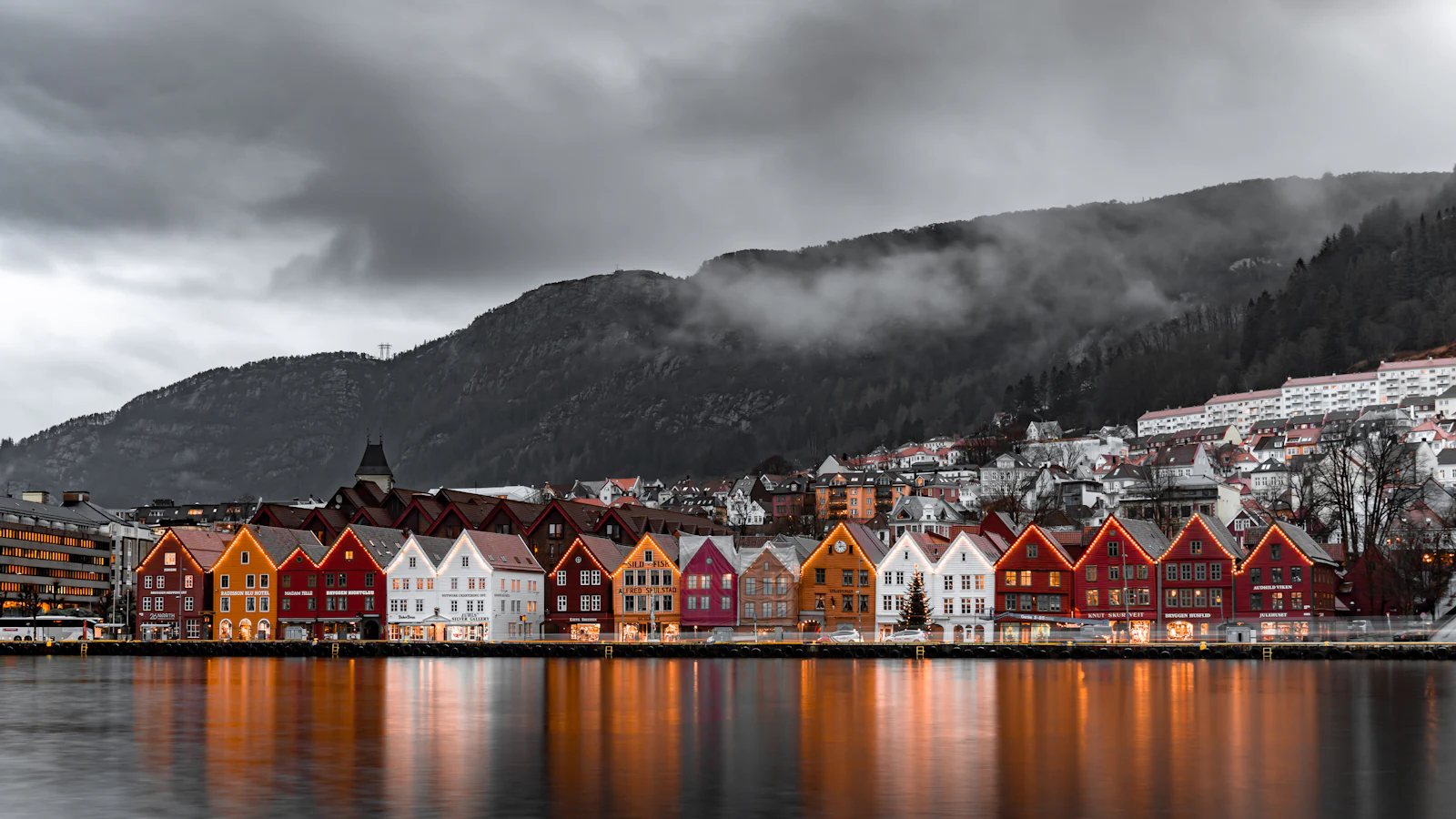
There’s a specific kind of quiet that hits you on the deck of a fjord ferry, somewhere between two thousand-metre cliff walls, when the engine noise fades into the background and you realise you’re the smallest thing in the frame by a margin of about a million to one. I felt it first on the Nærøyfjord, coffee going cold in my hands, and I’ve been chasing that same feeling around western Norway ever since. This is my complete guide to doing Bergen and the fjord country around it properly, whether you’re travelling by rental car, by train and ferry, or in your own van.
I’m Imran, and this blog tracks years of long-term travel, most of it done slowly, out of a van, with a strong bias toward places that reward patience. Bergen and the fjords is one of the easiest big-name Scandinavian trips to get wrong, because it’s tempting to try to see everything in three rushed days. I’m going to give you a route that actually works, paced properly, with real transport details, real prices where I can give them, and the specific sequence of stops that makes the most geographic sense so you’re not backtracking across half of western Norway.
Why Bergen Is the Right Base for a Fjord Trip
Bergen is Norway’s second-largest city and the undisputed gateway to the western fjords, sitting at the mouth of a cluster of waterways that includes some of the most famous fjords on earth: the Nærøyfjord, a UNESCO World Heritage site and the narrowest fjord in Norway, and the wider Sognefjord, the longest and deepest fjord in the country. Bergen itself is worth two full days on its own merits, with the UNESCO-listed Bryggen wharf, a funicular up to panoramic city views, and a seafood market that alone justifies the trip. But its real value for this itinerary is as a logistics hub: it’s where the trains, ferries, and fjord cruise boats all converge, making it the natural start and end point for a loop through fjord country.
Getting to Bergen: Airport and Rail Options
Flying into Bergen Airport, Flesland (BGO)
Bergen Airport Flesland is well connected within Europe, with direct flights from most major hubs including London, Amsterdam, Copenhagen, and of course Oslo. Check routes and fares through Avinor’s Bergen Airport page, or compare on SAS, Norwegian, and Widerøe. From the airport, the Bergen Light Rail (Bybanen) runs directly into the city centre in about 45 minutes and is by far the cheapest and easiest way in if you’re not picking up a rental car immediately.
Taking the Train: Oslo to Bergen via the Bergen Railway
If you’re already in Norway or arriving via Oslo, I’d strongly encourage taking the Bergensbanen (Bergen Railway) at least once in your life. It’s consistently ranked among the most scenic train journeys in the world, crossing the high Hardangervidda plateau with snow visible even in midsummer, before descending through waterfall-lined valleys into Bergen. The full journey from Oslo takes around 6.5-7 hours. Book through Vy, Norway’s national rail operator, or compare and book via Trainline or Omio. Reserve well ahead for the cheapest fares; last-minute tickets on this route can be three or four times the advance price.
Do You Need a Car, or Is Public Transport Enough?
This is the single most important planning decision for a fjords trip, and the honest answer is: it depends on your pace and your appetite for driving.
Bergen itself and a classic loop out to Flåm and the Nærøyfjord can absolutely be done by public transport, and in fact I’d argue the famous “Norway in a Nutshell” route (train, fjord cruise, train) is actually better done without a car, because the logistics are seamless, someone else does the driving on some genuinely hair-raising mountain roads, and you can look out the window instead of at the road. Book this route through Norway in a Nutshell’s official site or the equivalent Fjord Tours packages.
However, if you want to get beyond the well-trodden Flåm corridor and reach quieter viewpoints, the Hardangerfjord’s cherry orchards, or the truly spectacular Trollstigen and Geiranger area further north, you need your own vehicle. Public buses connect the main towns but run infrequently outside summer, and they simply don’t stop at the roadside pull-offs, waterfalls, and viewpoints that make western Norway special. My honest recommendation for anyone with more than four or five days: rent a car or campervan in Bergen and do the loop I’ve laid out below, but book the Flåm Railway as a specific, dedicated leg rather than driving that exact stretch, because the train journey itself is one of the top attractions in the region and driving would mean missing it entirely.
Cold-Weather and Mountain-Pass Driving Considerations
Western Norway’s fjord roads are dramatic and, in places, genuinely demanding, especially if you’re driving in shoulder season or winter.
- Mountain passes like Aurlandsfjellet (the road above Flåm, home of the famous Stegastein viewpoint) close seasonally, typically from around October through May, due to snow. Always check Statens vegvesen’s road status page before planning a route over a high pass outside summer.
- Ferries are woven into the road network here; several “roads” on your GPS actually include a car ferry crossing (for example between Lavik and Oppedal on the Sognefjord, or various Hardangerfjord crossings). Budget extra time for ferry queues in peak summer, and check timetables on Fjord1, the main regional ferry operator.
- Tunnels are everywhere in this region, some many kilometres long and unlit in older sections. Keep headlights on, moderate your speed, and be aware some older tunnels are single-lane with passing bays.
- Winter tyres are mandatory by law in winter conditions and fitted automatically by rental companies in the colder months; if you’re driving your own van down from further north, swap to winter or all-season tyres before descending into this region between roughly November and April.
- Hairpin roads like Trollstigen have very tight switchbacks with stone walls rather than guardrails in places; downshift, keep speeds low, and give oversized vehicles (buses, camper vans) plenty of room, especially on blind bends.
Van Life Logistics Around the Fjords
Wild camping under Norway’s allemannsretten right-to-roam law is more workable in the fjord region than in oversubscribed Lofoten, especially once you’re off the absolute tourist honeypots like central Flåm. That said, please camp responsibly: stay at least 150 metres from inhabited houses, don’t camp on cultivated land or visible farmland, pack out all rubbish, and move on after a night or two in any one spot. I mix free camping in quieter side valleys with paid campsites for showers and services, which are plentiful and generally excellent; check Camping.no for options along your route. Ferries that carry vehicles will also carry campervans without issue, though very tall or long rigs should double check dimensions against the specific ferry operator’s vehicle limits before booking.
The Full Bergen and Fjords Itinerary
This is a 7-9 day loop starting and ending in Bergen, built to follow the most sensible geographic sequence rather than bouncing back and forth. Compress it to 5 days if you’re tight on time by dropping the Hardangerfjord detour, or stretch it to 12 by adding Geiranger and the Trollstigen, which I’ve included as an optional extension at the end.
Day 1-2: Bergen City
- Start at Bryggen, the UNESCO-listed row of colourful wooden Hanseatic merchant buildings along the old harbour, Bergen’s most photographed spot and worth a slow wander through its narrow interior alleys and small craft workshops. Read more on the Visit Bergen official page for Bryggen.
- Walk five minutes to the Fish Market (Fisketorget) for fresh seafood, whale burgers if you’re curious, and a good lunch stop; it’s touristy but genuinely good quality.
- Ride the Fløibanen funicular up Mount Fløyen for a panoramic view over the city and surrounding fjords; there are marked hiking trails at the top if you want to extend the visit with a walk through the forest. Tickets and schedule at Fløibanen’s official site.
- On day two, visit the KODE art museums, the Hanseatic Museum, or, if the weather’s good, take the cable car up Mount Ulriken (Ulriken643) for an even bigger panorama and some genuinely good hiking trails along the ridge.
- Eat dinner at Bryggeloftet & Stuene, a classic Bergen institution for traditional Norwegian seafood, or for a special-occasion meal, book ahead at Lysverket, a well-regarded restaurant set inside the old power station next to the KODE museums.
- Pick up your rental car or campervan on the afternoon of day two if you’re driving the full loop; major agencies (Hertz, Avis, Sixt, Europcar) all operate both in the city centre and at Flesland Airport.
Day 3: Bergen to Voss
Drive or take the train (the Bergensbanen also stops at Voss, about an hour out of Bergen) to Voss, a lakeside town that’s the extreme sports capital of Norway.
- If you’re up for it, book a tandem paraglide over the lake and mountains, or try white-water rafting on the Stranda or Raundal rivers, both bookable through Voss Active, the main local adventure operator.
- Otherwise, a relaxed walk along Vangsvatnet lake and a stop at Voss’s historic wooden church is enough to justify the detour.
- Overnight in or near Voss, or push on toward Flåm if you’re keeping a tighter schedule.
Day 4: The Flåm Railway and the Nærøyfjord
This is the single most essential day of the entire trip, and I’d build the whole itinerary around it if you have to cut something else.
- Drive (or take the connecting train) to Myrdal, a tiny mountain station with essentially nothing there except the junction for the Flåmsbana.
- Ride the Flåm Railway down to Flåm itself, one of the steepest standard-gauge railway lines in the world, dropping nearly 900 metres over 20 kilometres through waterfalls, tunnels, and impossibly green valleys. The train stops briefly at Kjosfossen waterfall for photos. Tickets and timetable at the official Flåm Railway site; book ahead in summer as popular departures sell out.
- From Flåm, board a fjord cruise boat onto the Nærøyfjord, the narrowest fjord in Norway and a UNESCO World Heritage site, continuing to Gudvangen. This leg is often included in combined “Norway in a Nutshell” tickets from Fjord Tours, or can be booked separately through operators like The Fjords, who also run a quieter, smaller hybrid-electric boat option if you want to avoid the bigger tourist ferries.
- If you’re driving rather than doing the full rail-boat-rail loop, detour up to the Stegastein viewpoint above Aurland on your way out, a dramatic cantilevered platform jutting out 30 metres over the fjord, reachable via the Aurlandsfjellet mountain road (seasonal, summer only).
- Stay the night in Flåm or Aurland; there are campsites right by the fjord, and a handful of good guesthouses if you want a proper bed.
Day 5: Gudvangen to the Hardangerfjord
Drive south from Gudvangen through Voss and down toward the Hardangerfjord, often called Norway’s “orchard fjord” for its cherry, apple, and plum trees, which bloom spectacularly in May.
- Stop at Tvindefossen waterfall, an easy roadside stop just outside Voss, one of the most accessible big waterfalls in the region.
- Continue to Steinsdalsfossen near Norheimsund, unusual because you can walk on a path directly behind the falling water.
- Push on to Eidfjord at the head of the Hardangerfjord and, time permitting, drive up to the Vøringsfossen waterfall and the new Hardangervidda viewing platforms, some of the most dramatic engineered viewpoints in Norway.
- Overnight around Eidfjord or Ulvik, a particularly beautiful and quiet fjord-side village.
Day 6: Hardangerfjord to Odda and the Trolltunga Region
If you’re a hiker, this is your day. Odda is the base town for Trolltunga, the dramatic rock ledge jutting horizontally out over Ringedalsvatnet lake that’s become one of the most Instagrammed hikes in Norway.
- Be aware Trolltunga is a serious undertaking: roughly 20-27km round trip depending on your starting point, with 800+ metres of elevation gain, taking most hikers 8-12 hours. It is not a casual walk, and people underestimate it every single year, sometimes fatally in poor weather. Check conditions and consider a guided option through Trolltunga Active, who also run a shuttle service that shortens the route from the upper car park.
- If Trolltunga is too much for your schedule or fitness level, the shorter Buer glacier hike near Odda, or a visit to the Folgefonna glacier via Folgefonni Breførarlag’s guided glacier walks, gives you a taste of the same landscape with far less commitment.
- Overnight in Odda or at a campsite along Sørfjorden.
Day 7: Back to Bergen via Kvinnherad or the Ferry Route
Loop back toward Bergen, either retracing your steps or taking one of the Hardangerfjord car ferries for a change of scenery and to break up the driving. Stop at Rosendal, home to Norway’s only barony, Baroniet Rosendal, a small 17th-century manor house with lovely gardens, for a relaxed final stop before the city.
Optional Extension: Geiranger and the Trollstigen (Days 8-10)
If you have the extra days and appetite for driving, the Geirangerfjord, another UNESCO World Heritage fjord, and the hairpin Trollstigen mountain road further north are worth the extra distance, though they add substantial driving time from the Bergen loop (plan for a full extra day each way).
- Drive or ferry to Geiranger, stopping at the famous viewpoints of Flydalsjuvet and Dalsnibba for the classic postcard shot down over the fjord and its waterfalls, including the Seven Sisters and the Bridal Veil.
- Take a fjord cruise on Geirangerfjord itself, bookable through Visit Norway’s Geiranger page or GetYourGuide.
- Drive the Trollstigen (“Troll’s Path”), 11 hairpin bends climbing a near-vertical mountainside, open only from late May to around October depending on snow clearance; check the seasonal opening dates on Norwegian Scenic Routes’ official page before planning around it.
Where to Eat Along the Way
Beyond the Bergen recommendations above, a few fjord-country meals stand out. In Flåm, the Ægir BrewPub is a fantastic, slightly eccentric Viking-longhouse-styled brewery and restaurant right by the railway station, great for a hearty meal after the train ride. In Odda, local cafes along the harbour serve solid, simple Norwegian fare that’s exactly what you want after a long hike. If you’re near Rosendal, the cafe at Baroniet Rosendal does a lovely light lunch in the manor gardens.
Best Time to Visit for Fjord Scenery
Late May through September is the sweet spot for this itinerary, with June and early July offering the best combination of long daylight hours, blooming orchards along the Hardangerfjord, and reliably open mountain passes. May itself is stunning for the Hardangerfjord’s cherry blossoms specifically, though some higher routes like Trollstigen and Aurlandsfjellet may not have opened yet for the season. September brings golden autumn colour and noticeably thinner crowds on the Flåm Railway and Nærøyfjord cruises, at the cost of shorter days and a real chance of rain, which is common here year-round regardless of season, so pack for it no matter when you go.
Practical Notes for Van Lifers and Independent Travellers
- Book the Flåm Railway and any Nærøyfjord cruise in advance during June through August; these sell out on peak summer days.
- Carry cash sparingly; Norway is almost entirely card and Vipps-based, though isolated honesty-box parking areas near trailheads sometimes only take coins.
- Trolltunga in particular claims lives most years from hikers underestimating the distance, weather changes, or setting out too late in the day. Start at dawn, check the forecast, and turn back if conditions deteriorate; the ledge will still be there next time.
- Ferries fill up fast with vehicles in July; if your route depends on a specific crossing, check and reserve ahead through Fjord1’s booking system where reservations are offered.
- Fuel and groceries are cheaper in Bergen than in small fjord villages; stock up before you head out on the loop.
What This Trip Actually Costs
Fjord Norway has a reputation for being punishingly expensive, and while it’s not cheap, it’s more manageable than people assume if you plan around a few big-ticket items rather than nickel-and-diming every stop. Here’s a realistic daily breakdown for two people, based on my own trips through this exact route.
- Rental car or campervan: a small rental car runs roughly 700-1000 NOK per day in peak season including basic insurance; a campervan is closer to 1200-2000 NOK per day depending on size and season. Book early; summer availability in Bergen tightens up fast.
- Fuel: diesel and petrol both run around 18-22 NOK per litre. This loop covers a few hundred kilometres of genuinely mountainous driving, so budget generously; a week of driving typically costs 1500-2200 NOK in fuel for a mid-size vehicle.
- Ferries: vehicle ferry crossings on this route generally run 100-300 NOK each depending on vehicle size and distance; budget for at least two or three crossings if you’re doing the Hardangerfjord detour.
- Flåm Railway ticket: around 590-670 NOK per adult one-way as of recent seasons; check current pricing directly on the official site since it’s adjusted seasonally.
- Nærøyfjord cruise: combined rail-and-fjord “Norway in a Nutshell” packages typically run 1300-1600 NOK per person; a standalone fjord cruise leg is somewhat less.
- Campsite pitch: 300-450 NOK per night with power and water hookups; honesty-box rest areas and some free camping spots bring this down considerably a few nights a week.
- Groceries: 500-700 NOK per day for two people cooking most meals, using Rema 1000, Kiwi, or Coop.
All in, a comfortable but not extravagant nine-day loop for two people, including the Flåm Railway and one Trolltunga guided shuttle, tends to land around 18,000-24,000 NOK, not counting international flights. It’s a real number, but spread across nine days of some of the best scenery in the world, it’s a number I’ve never once regretted spending.
Packing List for a Fjords Road Trip
Western Norway’s climate is famously changeable, maritime, and wet, so pack accordingly regardless of the season you’re travelling in.
- A genuinely waterproof (not just water-resistant) outer shell; this region gets rain even in the height of summer, and the Bergen area specifically is one of the wettest parts of Norway.
- Layers you can add and remove quickly; temperatures swing significantly between a fjord-level town and an exposed mountain pass or viewpoint like Stegastein or Dalsnibba.
- Sturdy hiking boots with good grip, essential if Trolltunga, the Buer glacier trail, or any of the waterfall walks are on your list; the rock underfoot is often wet and polished smooth.
- A headlamp, even for day hikes, in case a longer trail like Trolltunga takes longer than planned and you’re still moving at dusk.
- A dry bag or waterproof phone case for the fjord cruise decks, where spray is common, especially on the smaller RIB-style boats.
- For van lifers: a solid grey water and fresh water container setup, a diesel or propane heater for shoulder-season nights in the mountains, and a good set of window insulation panels, since even summer nights at higher elevations near Myrdal or Aurlandsfjellet can get surprisingly cold.
- An offline map app and the paper hiking maps available from tourist information offices in Voss, Odda, and Eidfjord, since mobile coverage thins out in the deeper fjord valleys.
A Worthwhile Detour: Lysefjord and Preikestolen
If your trip extends south toward Stavanger, either before or after the Bergen loop, it’s worth carving out two extra days for the Lysefjord and its two headline hikes: Preikestolen (Pulpit Rock), a flat-topped cliff plunging 604 metres straight down into the fjord, and Kjeragbolten, a boulder wedged in a mountain crevasse that thrill-seekers stand on for the photo. Stavanger has its own airport (Stavanger Airport, Sola, code SVG) and is well connected to Bergen by a combination of ferry and road, or by a scenic express boat along the coast. Preikestolen is a manageable 8km round trip on a well-maintained trail, roughly 4-5 hours including breaks, and is one of the most rewarding moderate hikes in all of Norway. Book a guided hike or the Lysefjord cruise beneath the cliff through Lysefjorden Tourist Information or compare options on GetYourGuide’s Stavanger listings.
Mistakes I’ve Made on This Route
The first time I drove this loop, I underestimated how much time ferries add to a day. What looks like a 40-minute drive on the map can easily become a 90-minute affair once you factor in arriving early for a car ferry, queuing, the crossing itself, and disembarking. Now I always build in a buffer hour around any leg that includes a ferry crossing, and I check the Fjord1 timetable the night before rather than assuming I’ll just roll up and catch the next one.
The second mistake was attempting Trolltunga starting at 11am because I’d slept in after a late night in Odda. I finished the hike, but I was descending the steepest section in fading light and had to use my headlamp for the last 45 minutes. Every guide will tell you to start early, and I’m telling you again: start by 7am at the very latest in summer, earlier if you can manage it, both for the light and to beat the crowds on the narrow sections of trail.
The third: not booking the Flåm Railway far enough ahead on a July trip and ending up on a much later departure than planned, which threw off the connecting fjord cruise and cost us a full afternoon. Book this leg as soon as your dates are fixed, not once you’re already in Bergen.
Frequently Asked Questions
Can I do Bergen and the fjords as a day trip from Oslo?
You can do a very compressed version, and tour operators do sell “Norway in a Nutshell in a day” packages from Oslo, but I’d genuinely discourage it. You’ll spend more time on trains and boats than actually absorbing the scenery, and you’ll miss Bergen itself entirely. If your schedule truly only allows one day, I’d rather you do the Flåm-Nærøyfjord leg alone and skip Bergen than try to cram both into 14 hours of transit.
Is the Flåm Railway worth the money?
Yes, without reservation. It’s genuinely one of the most scenic rail journeys on the planet, not a gimmick, and even seasoned Norway veterans who’ve seen a hundred waterfalls still find themselves reaching for their phone cameras on this ride.
How difficult is Trolltunga really?
It’s a serious full-day hike, not a casual walk despite how it looks in photos. Good fitness, an early start, proper footwear, and a real weather check are all essential. If you’re not confident in your fitness or navigation, book a guided option or the shuttle service that shortens the route, both available through Trolltunga Active.
What’s the best month to see the Hardangerfjord’s fruit blossoms?
Typically early-to-mid May, though it varies year to year depending on the spring weather. Note that some higher mountain roads and passes elsewhere on this loop, like Trollstigen and Aurlandsfjellet, may not be open yet in early May, so you’ll need to plan around that if you’re chasing blossom season specifically.
Do I need to book fjord cruises in advance?
In July and August, yes, especially for the popular midday departures on the Nærøyfjord. Shoulder season (May, June, September) usually has more flexibility, but I still book at least a few days ahead to avoid disappointment.
How to Navigate the Bergen City Centre on Foot
Bergen’s old town is compact enough that a car is more of a liability than a help once you’re actually in the city; parking is expensive and limited, and most of the sights sit within a 20-minute walk of each other. Here’s the walking sequence I’d follow for an efficient first day.
- Start at Bryggen on the harbour’s north side, and walk its full length slowly, ducking into the narrow wooden passageways (called smug) between the buildings, where you’ll find small workshops selling ceramics, wool, and glass.
- From the southern end of Bryggen, it’s a two-minute walk around the harbour to the Fish Market for lunch.
- From the Fish Market, walk five minutes inland to the base of the Fløibanen funicular station and ride up to Fløyen.
- Back down, it’s a ten-minute walk through the compact city centre to the KODE museum cluster around Lille Lungegårdsvann lake, a good stop for an hour or two if you want art alongside nature.
- End the day back near Bryggen for dinner, keeping the whole day within an easily walkable loop and avoiding the need for a car or taxi entirely.
If you do want to reach Mount Ulriken on the same trip, it’s a short bus ride or a longer walk from the centre; the Ulriken643 cable car has its own dedicated shuttle bus from central Bergen that’s worth using rather than driving and hunting for parking.
Understanding the Ferry-and-Road Network
One thing that surprises first-time visitors is just how integrated ferries are into the ordinary road network here. Norwegian GPS and mapping apps will route you directly onto a ferry as if it were simply another road segment, and locals treat it exactly that way. A few practical notes on how this actually works day to day:
- Most vehicle ferries on this route don’t require advance booking outside peak summer, you simply queue and pay on board or via an automatic numberplate-recognition system that bills your rental card on file. Ask your rental company whether their vehicle is registered with AutoPASS, Norway’s automatic toll and ferry payment system, since this affects how you’re charged.
- Peak times (Friday afternoons, Sunday evenings, and any sunny weekend day in summer) can mean a wait of one or even two ferry departures at busier crossings, so build slack into your itinerary on those days specifically.
- Foot passengers and cyclists board first and are rarely turned away even when the vehicle deck is full, which is worth knowing if you’re doing any part of this trip without a car.
- Tolls are common throughout this region, both on certain roads and bridges and built into some ferry fares; a rental car will typically have this billed automatically to the card on file, so don’t be alarmed by a toll charge appearing on your statement after the trip ends.
A Note on Weather and What to Actually Expect
Bergen is famously one of the rainiest cities in Europe, with locals joking that if you can see Mount Fløyen, it’s about to rain, and if you can’t see it, it’s already raining. Don’t let this put you off; the rain tends to come in bursts rather than settling in for entire days, and the region’s beauty is arguably enhanced by it, since every one of those countless waterfalls you’ll drive past is fed by exactly this weather pattern. Pack proper rain gear, keep your itinerary flexible enough to swap an outdoor day for a museum day if a particularly grim system rolls through, and don’t schedule anything weather-dependent, like the Trollstigen drive or a Trolltunga attempt, for your only day in a given location. Give yourself at least one flexible spare day across the whole trip to absorb a bad-weather swap.
Alternative Bases if You Want a Shorter Trip
If a full loop isn’t feasible on your timeline, both Flåm and Voss work well as a standalone 3-4 day base without ever returning to Bergen city, provided you fly in and out via Bergen Airport at either end of a shorter regional itinerary. From Flåm specifically, you can reach the Nærøyfjord, the Flåm Railway, and the Stegastein viewpoint all within a single day each, making it an efficient, lower-mileage version of this itinerary for anyone short on time but still wanting the headline fjord experience without the full multi-region loop.
Final Thoughts
The fjords around Bergen have a way of making you feel appropriately small, in the best sense. I’ve driven this loop with a full van and I’ve done the rail-and-boat version with nothing but a daypack, and both are legitimate ways to see it. What matters more than your mode of transport is your pace: build slack into your days, don’t try to see the Nærøyfjord, Trolltunga, and Geiranger all on the same trip if you’ve only got a week, and let the waterfalls and the long fjord silences do the work they’re famous for. Bergen will still be there with its seafood market and its funicular when you get back.
If you take one thing away from this guide, let it be this: don’t try to out-drive the fjords. I’ve watched too many travellers treat this region like a checklist to be cleared in the fewest possible days, racing between viewpoints with barely a photo stop in between. The whole point of a place built from water, rock, and endless waterfalls is that it forces you to slow down; the roads themselves won’t let you rush even if you wanted to. Book your Flåm Railway seats early, respect the mountain weather, and leave room in your plan for the fjord to surprise you on a random Tuesday afternoon between two towns you’d never heard of before this trip.
I’ll leave you with the same thing a Bergen local told me on my first trip, standing under an awning waiting out yet another rain shower near Bryggen: there’s no such thing as bad weather here, only bad clothing. Pack well, drive carefully, and go see it.
n
Photo by Michael Fousert on Unsplash.