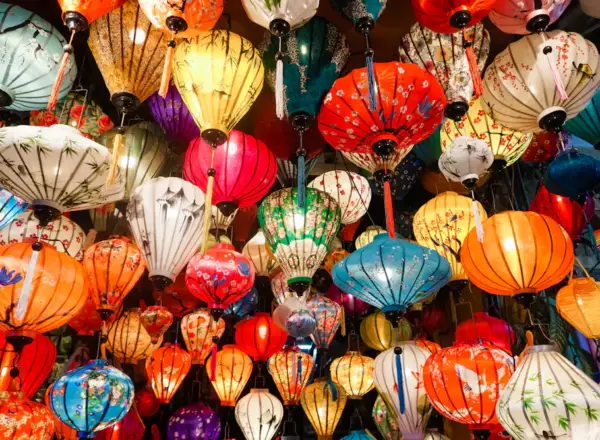
Laos has a way of slowing you down whether you plan for it or not, and nowhere is that more true than Luang Prabang. I arrived expecting a two-night stopover on a longer Southeast Asia loop and ended up staying nine days, mostly because I couldn’t bring myself to leave a town where the biggest decision of my morning was which stretch of the Mekong to watch the sunset from. Luang Prabang is a UNESCO World Heritage town wedged onto a peninsula where the Mekong and Nam Khan rivers meet, ringed by limestone mountains, saffron-robed monks everywhere you look, and a genuinely different pace of life than almost anywhere else in the region.
This guide walks you through exactly how to get here, how to get around (scooter, tuk-tuk, or your own two feet — and when each makes sense), and a full day-by-day itinerary covering the town itself, the waterfalls, the caves, and the Mekong River day trips that make this one of the most rewarding stops in all of Southeast Asia.
Where to Fly Into: Luang Prabang International Airport (LPQ)
Luang Prabang International Airport (LPQ) sits just 4 km from the old town, making it an unusually convenient gateway for a town this small and remote-feeling. LPQ has direct connections from Bangkok, Chiang Mai, Hanoi, Siem Reap, and Vientiane on carriers including Lao Airlines, AirAsia, Bangkok Airways, and Vietnam Airlines. If you’re coming from further afield, the most common route is a connecting flight through Bangkok’s Suvarnabhumi Airport (BKK) or Hanoi’s Noi Bai (HAN).
A note on visas: most nationalities can get a visa on arrival at LPQ for a fee (payable in USD, cash, exact change appreciated), valid for 30 days. Bring a passport photo and confirm current requirements on the Lao consular visa portal before you fly, as fees and rules do shift periodically.
From the airport into town:
- Airport tuk-tuk: A shared or private tuk-tuk from the arrivals area into the old town costs roughly 50,000-80,000 LAK (about $2.50-4 USD shared, more for private).
- Hotel pickup: Many guesthouses will arrange an airport pickup for a similar price if you message ahead — genuinely worth it after a long travel day.
- Walking: If you’re traveling light and staying near the airport end of town, it’s a walkable 30-40 minutes, though I’d only recommend this in the cooler morning hours.
Getting Around Luang Prabang: Scooter vs. Bicycle vs. Tuk-Tuk
Luang Prabang itself is compact enough to explore almost entirely on foot or by bicycle, but a scooter genuinely opens up the surrounding countryside — the waterfalls, caves, and weaving villages that make this region so rewarding sit well outside comfortable walking or cycling range.
Scooter Rental
Renting a scooter in Luang Prabang is straightforward, with rental shops clustered along the main tourist streets. Expect to pay 80,000-120,000 LAK/day (roughly $4-6 USD) for a basic automatic.
- License requirements: As in Thailand and Vietnam, Laos technically requires an International Driving Permit alongside your home license, though enforcement in Luang Prabang itself is inconsistent. Bring one anyway — it matters most for insurance validity if something goes wrong, not for avoiding a roadside fine.
- Road conditions: Roads immediately around town are decent, but conditions degrade quickly once you’re on the way to Kuang Si Falls or further out — expect potholes, occasional unpaved stretches, and livestock wandering onto the road. Ride at a measured pace, especially after rain.
- Helmets are provided by rental shops and should always be worn, regardless of how relaxed local enforcement looks.
- Fuel is sold both at proper stations and from roadside bottle stalls in more rural areas — top up in town before heading out to the falls or caves, since options thin out once you’re away from the main road.
Bicycle
For exploring the peninsula itself — the temples, the night market, the riverside roads — a bicycle is honestly one of the most pleasant ways to get around. Luang Prabang is flat, uncrowded compared to Vietnam or Thailand’s bigger cities, and genuinely a joy to cycle. Most guesthouses rent bikes for 20,000-30,000 LAK/day.
Tuk-Tuk
Shared or private tuk-tuks are the standard way to reach Kuang Si Falls, the Pak Ou Caves boat departure point, and other slightly-out-of-town spots if you’d rather not ride yourself. Expect to negotiate a price beforehand — a shared tuk-tuk to Kuang Si Falls runs about 40,000-60,000 LAK per person round trip if you can fill the vehicle with other travelers, which your guesthouse can often help arrange.
Part One: Luang Prabang Old Town — Three Days
Day 1: Temples, the Morning Market, and Mount Phousi
- Very early morning (5:30-6am): Witness (and respectfully participate in, if you choose) the Tak Bat alms-giving ceremony, where lines of monks walk silently through the streets at dawn collecting rice and food offerings from kneeling locals. This is one of the most photographed moments in Laos, and also one of the most sensitive — stay a respectful distance, don’t use flash photography, and if you want to give alms yourself, buy sticky rice from a local vendor rather than a tourist stall, and follow the lead of local participants rather than crowding the monks for photos. Many tour operators, including listings on GetYourGuide, now offer respectful, guided context on the ceremony’s meaning if you want to understand what you’re witnessing rather than just photographing it.
- Morning: Walk through the Luang Prabang Morning Market along Sisavangvong Road, where vendors sell fresh produce, river fish, and forest herbs — a genuinely local scene distinct from the tourist-focused night market that takes over the same street after dark.
- Visit Wat Xieng Thong, the most important and beautiful temple in Luang Prabang, built in 1560 and famous for its sweeping roofline and a stunning “Tree of Life” mosaic on its rear exterior wall.
- Midday: Lunch of Lao specialties — try khao soi (Laos’s version, distinct from the Thai dish of the same name, made with a tomato-based pork broth) at Tamarind Restaurant, well known for introducing visitors to authentic Lao cuisine in an approachable setting.
- Afternoon: Climb Mount Phousi, the small hill at the center of the peninsula, via the 300-plus step staircase to reach Wat Chom Si at the summit — arrive by 5pm to claim a good spot for one of the best sunset views over the Mekong and the surrounding mountains anywhere in Laos.
- Evening: Browse the Luang Prabang Night Market, which fills the same central street with handwoven textiles, silver jewelry, and Hmong and Khmu handicrafts from surrounding hill tribe communities — genuinely good quality compared to a lot of Southeast Asia’s tourist markets, and largely fixed or lightly negotiable pricing.
Day 2: Royal Palace, More Temples, and the Riverside
- Morning: Visit the Royal Palace Museum (Haw Kham), the former residence of the Lao royal family before the 1975 revolution, now a museum housing royal regalia, gifts from foreign dignitaries, and the revered Pha Bang Buddha image the city is named after. Book ahead or buy on-site; photography inside is restricted in most rooms.
- Continue to Wat Mai next door, notable for its five-tiered roof and gold bas-relief façade depicting scenes from the life of Buddha and local folk tales.
- Midday: Lunch at one of the riverside restaurants along the Mekong, where you can watch longtail boats drift past while eating grilled Mekong river fish.
- Afternoon: Walk or cycle across the bamboo bridge (rebuilt seasonally each dry season, replaced by a permanent bridge in the wet season when the river rises) over the Nam Khan River to the quieter, more residential side of town, where you’ll find smaller temples and a genuinely local neighborhood feel away from the main tourist strip.
- Visit the UXO Laos Visitor Centre or the COPE Visitor Centre-affiliated exhibits if available in town, for sobering but important context on Laos’s history as the most heavily bombed country per capita in world history during the Vietnam War era — a piece of history that shapes the countryside you’ll be riding through.
- Evening: Dinner and a Beerlao at one of the many relaxed riverside bars along the Mekong, watching the sun go down over the water.
Day 3: Weaving Villages and a Slow Riverside Day
- Morning: Visit Ock Pop Tok, a well-regarded textile center and living craft center just outside town where you can watch traditional Lao weaving techniques in action, take a half-day weaving or natural dye workshop, and browse genuinely high-quality handwoven textiles.
- Ride or cycle to Ban Xang Khong, a traditional weaving and papermaking village a short distance from town, known for handmade saa (mulberry) paper products and silk weaving demonstrations.
- Afternoon: Take it slow — this is a good day to simply wander the peninsula’s quieter lanes, visit a café, or take a relaxing Lao herbal sauna and massage at one of the traditional wellness centers in town (a genuinely restorative Luang Prabang tradition worth building time for).
- Evening: One more pass through the night market if you didn’t finish shopping, then a final Mekong sunset from one of the riverside terraces.
Part Two: Kuang Si Falls — The Essential Day Trip
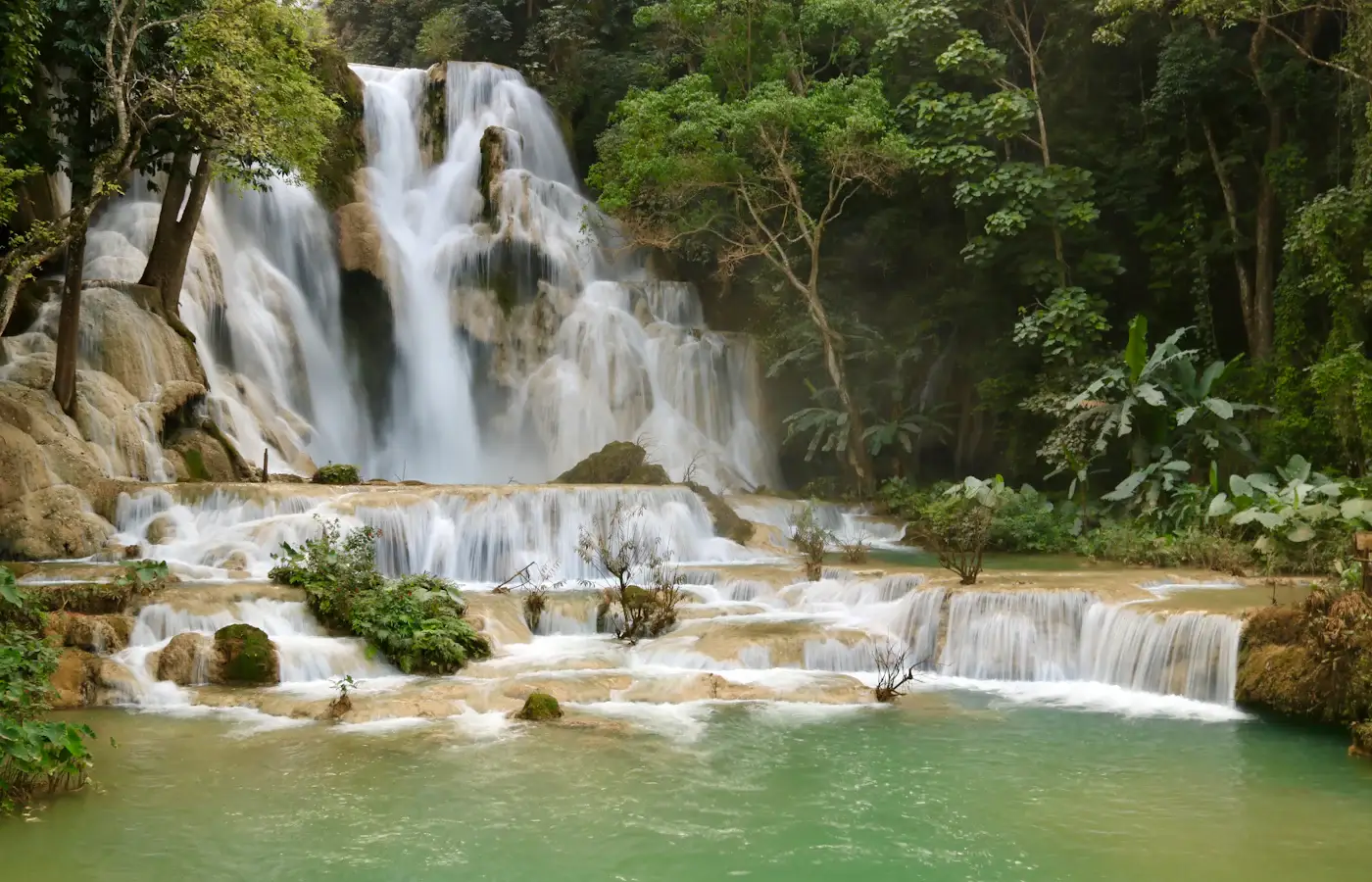
Kuang Si Falls, about 29 km south of Luang Prabang, is the single most famous natural attraction near the city — a multi-tiered, turquoise-blue waterfall cascading through limestone pools you can actually swim in. It’s genuinely one of the most beautiful waterfalls in Southeast Asia, and worth building an entire day around.
Step-by-Step Guide to Kuang Si Falls
- Leave as early as possible (by 7:30-8am) — this is essential advice, not just a suggestion. Kuang Si gets genuinely crowded with tour buses by mid-morning, and the light for photography is far better early.
- Ride your own scooter (about 45 minutes each way along a paved but winding road) for maximum flexibility, or join a shared tuk-tuk or minivan tour if you’d rather not navigate yourself — both options are widely available and bookable a day ahead through your guesthouse or via GetYourGuide.
- Stop at the Kuang Si Bear Rescue Centre at the entrance to the falls, run by Free the Bears, which houses Asiatic black bears (moon bears) rescued from the illegal wildlife trade — a genuinely worthwhile, ethically-run stop and included in your falls entrance ticket.
- Walk up through the lower pools first, swimming at the lower tiers where the water is calmer, before continuing up the forested trail to the main cascade — the upper falls are the most photographed, with a viewing platform at the base of the main 50-meter drop.
- Continue past the main falls via a steep side trail to the very top of the cascade if you’re up for a short, sweaty hike — the crowds thin dramatically past the main viewing area, and there’s a smaller, quieter pool near the top worth the climb.
- Bring appropriate swimwear and water shoes if you have them — the limestone pool floors can be slippery, and modest swimwear is appreciated given the site’s mix of local and international visitors.
- Head back to town by mid-afternoon, both to beat the worst of the departing tour-bus traffic and to have energy left for a relaxed evening back in Luang Prabang.
Part Three: Pak Ou Caves and the Mekong River
The Pak Ou Caves, about 25 km upriver from Luang Prabang at the confluence of the Mekong and Nam Ou rivers, are a pair of limestone caves packed with thousands of Buddha statues left by pilgrims over centuries — one of the most atmospheric religious sites in Laos.
Step-by-Step Guide to the Pak Ou Caves
- Book a boat from the main pier in Luang Prabang — you can charter a private longtail boat, join a shared group boat, or book a half-day tour package through GetYourGuide or Viator that includes both the caves and a village stop.
- Depart mid-morning for the roughly 2-hour upriver journey, watching riverside life unfold along the banks — fishing boats, water buffalo, small riverside villages.
- Stop at Ban Xang Hai (the “whiskey village”), where you can sample and buy lao-lao, the local rice whiskey, often bottled with snakes or scorpions for the more adventurous souvenir hunters.
- Explore the lower cave (Tham Ting) first, easily accessible from the boat landing, packed with hundreds of Buddha images of all sizes left by generations of pilgrims and royal family members.
- Climb the steps to the upper cave (Tham Phum), deeper and darker, requiring a flashlight (bring one, or rent one at the entrance) and home to even more statues in a genuinely atmospheric, less-visited setting.
- Return downriver by late afternoon, arriving back in Luang Prabang in time for sunset.
Part Four: Further Afield by Scooter
If you have extra days and want to see more of the countryside independently by scooter, a few destinations reward the ride.
Tad Sae Waterfalls
A quieter, less-visited alternative (or complement) to Kuang Si, Tad Sae is reached partly by scooter and partly by a short boat crossing, with multi-tiered limestone cascades similar in character to Kuang Si but with a fraction of the crowds, especially in the dry season when the falls run lower but still swimmable.
Living Land Farm
A working organic rice farm a short ride from town offering hands-on experiences — plowing with water buffalo, transplanting rice seedlings, and learning the full seed-to-plate process of rice cultivation that underpins so much of Lao rural life. A genuinely memorable, unpretentious half-day activity.
The Road Toward Nong Khiaw
For more experienced riders with extra time, the road northeast toward Nong Khiaw — a small riverside town ringed by dramatic karst limestone peaks, often compared to a mini Halong Bay on land — makes for a spectacular multi-day scooter extension, though most travelers reach it by public minivan (about 3-4 hours, bookable through 12Go Asia) given the distance and road conditions involved.
A Closer Look at Luang Prabang’s French Colonial Layers
One thing that sets Luang Prabang apart visually from Vietnam’s or Thailand’s old towns is the specific blend of Lao temple architecture with French colonial-era shophouses and villas, a legacy of Laos’s decades as part of French Indochina. Walking Sakkaline Road or Kingkitsarath Road, you’ll notice shuttered windows, wrought-iron balconies, and pastel-painted facades sitting directly beside gilded temple gates in a way that feels distinct even from similarly colonial-influenced towns like Hoi An. Several of these old villas have been lovingly restored into boutique hotels and cafes, and even if you’re not staying in one, it’s worth ducking into a courtyard café housed in one of these buildings for a coffee just to see the restoration work up close. The town’s UNESCO World Heritage listing specifically protects this architectural mix, which is part of why Luang Prabang has largely avoided the high-rise development that’s changed the skyline of bigger regional cities.
Getting Oriented: A Simple Mental Map of the Peninsula
Because so much of this guide involves navigating on your own two feet, by bicycle, or by scooter, it helps to have a simple mental map before you land. The old town sits on a narrow peninsula bounded by the Mekong River on one side and the smaller Nam Khan River on the other, with the two waterways meeting at the peninsula’s tip near Wat Xieng Thong. Sisavangvong Road runs down the spine of the peninsula, becoming the night market street each evening, and most of the major temples and the Royal Palace Museum sit directly along or just off this main artery. Mount Phousi rises directly from the middle of the peninsula, making it a useful landmark to orient yourself by from almost anywhere in town. Once you’ve walked this spine once or twice, the whole layout clicks into place quickly — it’s a genuinely easy town to navigate without getting lost, even in the pre-dawn dark on your way to the alms ceremony.
What to Eat in Luang Prabang
- Khao soi (Lao style) — a tomato-and-pork-based noodle soup, distinct from its Thai namesake, found at local noodle stalls throughout town.
- Orlam — a hearty Luang Prabang stew of buffalo skin, eggplant, and bitter herbs, considered one of the region’s signature dishes.
- Sai oua — Lao-style herb sausage, similar in spirit to its northern Thai cousin but with its own distinct seasoning blend.
- Jeow — the essential Lao chili dip, served alongside almost every meal with sticky rice for scooping.
- The night market food alley — a dedicated lane of the night market packed with cheap, excellent set-plate buffets, one of the best-value meals anywhere in the country.
- Tamarind Restaurant and Manda de Laos (set in a beautifully restored former royal lotus pond) both offer more elevated, multi-course introductions to Lao cuisine if you want a sit-down splurge.
Suggested Budget Breakdown
- Budget backpacker: $20-30 USD/day — guesthouse dorm or basic private room, street food and market meals, bicycle or shared tuk-tuk transport.
- Mid-range: $45-70 USD/day — boutique guesthouse, a mix of local and sit-down restaurants, scooter rental plus the Kuang Si and Pak Ou Caves trips.
- Comfort traveler: $100+ USD/day — riverside resort accommodation, private boat and driver bookings, spa treatments, and fine dining at spots like Manda de Laos.
Laos runs on both Lao kip (LAK) and, informally, US dollars and Thai baht in many tourist-facing businesses — carry a mix of kip for markets and small vendors, and USD for larger purchases and entrance fees where accepted.
Suggested Itineraries by Trip Length
3 Days (Highlights Only)
- Day 1: Arrive, alms ceremony, Wat Xieng Thong, Mount Phousi sunset, night market.
- Day 2: Kuang Si Falls full day trip.
- Day 3: Royal Palace Museum, Pak Ou Caves half-day boat trip.
5-6 Days (The Full Guide Above)
This is the itinerary detailed step-by-step throughout this guide — three days exploring the old town in depth, plus dedicated full days for Kuang Si Falls and the Pak Ou Caves.
7-10 Days (Add-Ons)
- Add Tad Sae Waterfalls and Living Land Farm as quieter alternative days.
- Continue to Nong Khiaw and the Nam Ou River valley for a genuinely off-the-beaten-path extension.
- Take a slow boat down the Mekong toward the Thai border at Huay Xai — a classic two-day river journey through remote Lao countryside, bookable through 12Go Asia.
Common Questions Before You Go
Is Luang Prabang safe to explore by scooter?
Yes, generally — traffic is far lighter than Vietnam or Thailand’s bigger cities, and the town itself is easy to navigate. The main risks are road conditions once you’re out toward the waterfalls (potholes, unpaved stretches, occasional livestock) rather than traffic density, so ride at a measured pace and avoid riding after dark on rural roads, which are unlit.
How should I behave at the alms-giving ceremony?
Keep a respectful distance, never use flash photography or get physically close to the monks’ path, dress modestly, and if you choose to give alms, buy your offerings from a reputable local vendor rather than the aggressive stall-sellers who sometimes push overpriced, low-quality rice on tourists right before the ceremony. Many locals consider tourist behavior at this ceremony to have degraded its solemnity in recent years — the more respectfully you approach it, the better for everyone.
Do I need to book Kuang Si Falls or the Pak Ou Caves in advance?
Entrance to Kuang Si can be paid on arrival, but booking transport (tuk-tuk or tour) a day ahead through your guesthouse or a platform like GetYourGuide ensures you actually get the early departure that makes the visit worthwhile. Pak Ou Caves boat trips are worth booking a day ahead as well, particularly in high season (November-February), to secure a reasonable departure time and avoid overpaying at the pier.
What’s the best time of year to visit?
November through February is the cool, dry season and the most comfortable time to visit — clear skies, comfortable temperatures, and Kuang Si Falls running at a beautiful turquoise blue. March through May gets hot and hazy from regional agricultural burning. The wet season (June-October) brings dramatic waterfall flow but muddier trails and less predictable riding conditions.
Where to Stay
Staying on the peninsula itself, within walking distance of Wat Xieng Thong and the night market, puts you closest to the main sights and the best sunset spots. A number of beautifully restored French colonial-era villas here have been converted into boutique guesthouses that are worth the slight price premium for the atmosphere alone. Book through Booking.com or Agoda.
Practical Tips Before You Go
- ATMs are available in town but can run out of cash during peak season — carry some USD as backup.
- SIM card: Unitel and Laos Telecom both offer reasonably priced tourist SIM packages at the airport or in town; coverage is solid around Luang Prabang but thins out significantly on rural roads toward the waterfalls and caves.
- Respect at temples: Cover shoulders and knees, remove shoes before entering temple buildings, and never touch a monk if you’re a woman — this is a genuine cultural and religious rule, not just etiquette.
- Alcohol and curfew: Luang Prabang has historically enforced an earlier night curfew (bars and venues closing around 11pm-midnight) compared to bigger Southeast Asian cities — part of what keeps the town feeling calm rather than a party destination.
- Slow travel mindset: Don’t over-schedule. Luang Prabang’s charm is largely in its pace — build in unstructured time, not just a checklist of sights.
Connectivity and Staying in Touch on the Road
Laos is generally less digitally connected than Vietnam or Thailand, and Luang Prabang’s rural surroundings reflect that — mobile coverage in town itself is reliable, but it drops out noticeably once you’re on the road to Kuang Si Falls, on the Mekong toward the Pak Ou Caves, or anywhere near Nong Khiaw. Download offline Google Maps tiles for the Luang Prabang province before you set out on any of the scooter day trips in this guide, and don’t count on being reachable during the river sections of the Pak Ou Caves trip, since there’s no signal at all on parts of the water. A Unitel SIM picked up at the airport or in town covers the essentials for the days you’re in the city itself.
Packing Notes Specific to This Trip
- Modest clothing for temple visits and the alms ceremony — shoulders and knees covered, and something you don’t mind being out in before dawn.
- A headlamp or flashlight for the upper Pak Ou cave, which has minimal lighting once you’re past the main lower chamber.
- Water shoes or sturdy sandals for Kuang Si and Tad Sae — the limestone pool floors are slippery, and bare feet aren’t ideal on the rockier sections.
- A light rain jacket even in dry season — Mekong weather can turn quickly, especially on longer river trips.
- Cash in small denominations of both Lao kip and USD — rural stalls, boat operators, and the whiskey village vendors rarely have change for large notes or cards at all.
- A dry bag for the Pak Ou Caves boat trip and any river crossings — splashback is common even on calm days.
Responsible Travel Notes for Laos
Laos remains one of the least-developed and most quietly resilient countries in Southeast Asia, and a few extra considerations go a long way toward being a good guest here. The legacy of unexploded ordnance (UXO) from the Vietnam War-era Secret War in Laos is still a genuine, present danger in many rural areas of the country — stick to marked paths and established trails on any hike or countryside ride, and never venture off-trail out of curiosity, even in areas that look perfectly ordinary. This is one of the reasons a visit to the UXO Visitor Centre in town is worth your time beyond simple historical interest; it directly shapes how you should move through the countryside.
On the tourism side, buying textiles and crafts directly from weaving villages like Ban Xang Khong or from cooperatives like Ock Pop Tok puts money more directly into local hands than mass-produced souvenirs from the night market’s less scrupulous stalls, though even the night market itself is largely community-supplied and worth supporting. And when it comes to wildlife tourism — tiger interactions, elephant rides, or similar attractions occasionally advertised around Luang Prabang — apply the same scrutiny you would in Thailand; look for genuine rescue and rehabilitation operations like the Kuang Si Bear Rescue Centre rather than anything offering close contact, riding, or performance with wild animals.
A Few Extra Detours Worth Knowing About
Utopia and the Sunset Riverside Bars
Along the Nam Khan riverside, a cluster of relaxed bars and restaurants built on stilted platforms over the water make for one of the best low-key evening spots in town — order a Beerlao, grab a floor cushion, and watch the light change over the river as the day winds down. It’s the kind of unremarkable-on-paper activity that ends up being many travelers’ favorite memory of the whole trip.
The Blue Lagoon and Local Swimming Spots
Beyond Kuang Si and Tad Sae, several smaller, lesser-known swimming holes dot the countryside around Luang Prabang, often known only to local guesthouse staff. Ask around rather than relying solely on published guides — some of the best afternoons I’ve had near Luang Prabang came from a tip whispered by a guesthouse owner rather than anything I found written down.
Sunrise Alternative: Wat Chom Si Without the Crowds
While most visitors climb Mount Phousi for sunset, a sunrise visit is a genuinely underrated alternative — far fewer people, softer light over the misty river valley, and a good vantage point to watch the town wake up before the alms ceremony crowds the main streets. If you’re an early riser anyway for the Tak Bat ceremony, consider doing the Phousi climb first and working the ceremony viewing in afterward, reversing the usual order.
Combining Luang Prabang With the Rest of Laos and the Region
Luang Prabang works beautifully as a standalone week-long trip, but it also slots naturally into a longer Southeast Asia loop. Flying in from Chiang Mai or Hanoi (both under two hours by air) makes it an easy add-on to either of the itineraries covered elsewhere on this site, and flying onward to Vientiane, Siem Reap, or back through Bangkok keeps momentum going if you’re continuing a longer regional trip. Overland travelers sometimes choose to arrive via the slow boat down the Mekong from the Thai border at Huay Xai, a genuinely memorable if slower alternative to flying, taking two days with an overnight stop in the small river town of Pakbeng along the way.
A Personal Note on Why Luang Prabang Stays With You
Of every stop across years of long-term travel through Southeast Asia, Luang Prabang is the one I recommend most emphatically to people who say they want to “slow down” but don’t quite know how. Something about the combination of the monks at dawn, the unhurried Mekong, and a town small enough to fully know within a week gives you permission to stop moving in a way that’s hard to find elsewhere in the region. I’ve watched fellow travelers arrive planning a two-night stopover and, almost without exception, extend their stay once they’ve had a single sunset from Mount Phousi.
Part of what makes it work is scale — Luang Prabang never feels like it’s performing for tourists the way some heritage towns can. Monks still walk the alms route because it’s a living daily practice, not a staged photo opportunity, even if plenty of visitors treat it that way. Locals still shop at the morning market for actual groceries. The weaving villages outside town are still working craft communities, not recreations. Ride out to Kuang Si early enough to beat the buses, sit by the Mekong at sunset with a cold Beerlao, and you’ll understand within a day or two why so many long-term travelers, myself included, keep finding excuses to stay just one more night.
If you take away one piece of advice from this guide, let it be this: resist the urge to pack Luang Prabang full. Every itinerary above can be compressed into a rushed long weekend if you have to, but the town rewards the traveler who leaves gaps – an unplanned afternoon to sit by the Nam Khan with a book, a morning with nothing scheduled after the alms ceremony, an evening where the only plan is which riverside bar to watch the sunset from. Book your scooter, plan your Kuang Si and Pak Ou days properly so you beat the crowds, and then let the rest of your schedule stay loose. That’s the Luang Prabang worth flying halfway around the world for.
And if this is your first time in Laos after time spent in Vietnam or Thailand, give yourself a day or two to simply recalibrate. The pace here is genuinely different – quieter streets, fewer hard sells, a country that still feels, in the best way, a little bit like it’s operating on its own clock rather than a tourist board’s schedule. Luang Prabang will meet you wherever you arrive from, and it will almost certainly ask you to slow down more than you planned to. Let it.
Whichever version of this itinerary you follow, from a rushed three-day stopover to the full ten-day countryside exploration, land at LPQ with an open schedule, rent a scooter once you’ve found your feet, and treat the waterfalls, caves, and temples less as a checklist and more as an excuse to spend time in a place that still rewards patience. That, more than any single sight on this list, is what makes Luang Prabang worth the trip.