
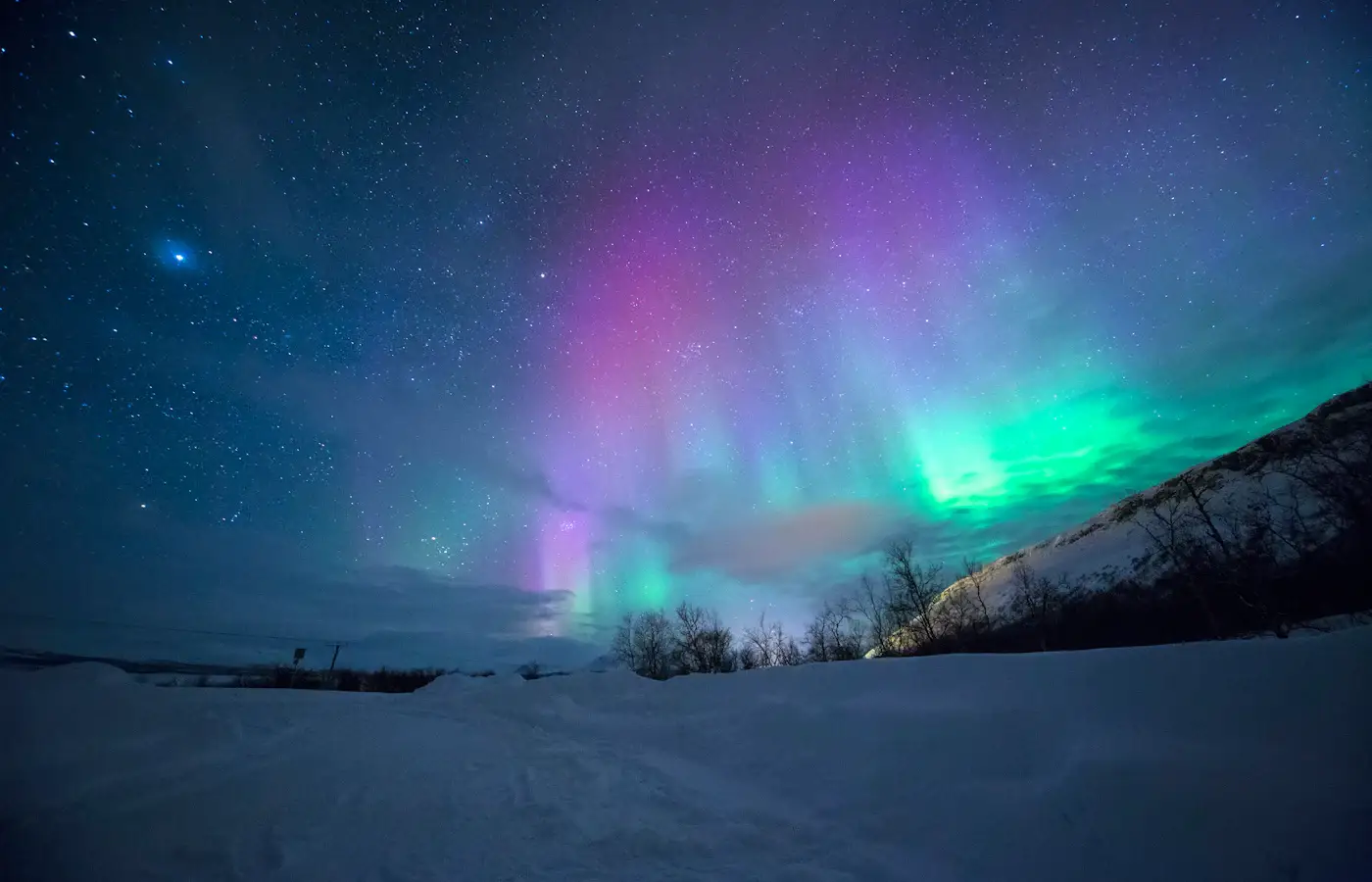
I parked my van on a gravel pull-off above Ersfjordbotn at one in the morning, engine off, heater humming just enough to keep the windows from icing over, and watched the sun trace a slow, lazy arc along the mountains across the water without ever quite touching them. A pod of something, porpoises maybe, broke the surface of the fjord below. I hadn’t planned to stop there. I’d just run out of road worth driving past without pulling over. That’s Tromsø for you, a city that somehow manages to be both a genuine urban hub, with good coffee and a proper nightlife, and the literal launching point into some of the wildest Arctic scenery in Norway, often within a twenty-minute drive of the city centre.
I’m Imran, and I’ve spent enough seasons living out of a van in the far north to have strong, hard-earned opinions about how to do Tromsø properly, in both midnight sun summer and the deep, aurora-chasing dark of winter. This guide covers the whole trip: how to get there, whether you need a car, the exact sequence of stops and day trips that make the most sense geographically, cold-weather van life specifics that genuinely matter at this latitude, and real, bookable recommendations for restaurants and activities along the way.
Why Tromsø Deserves More Than a Weekend
Tromsø sits at nearly 69.6 degrees north, comfortably above the Arctic Circle, on a small island connected to the mainland by a striking arched bridge, with the dramatic Tromsdalstinden peak and its cable car looming across the strait. It’s often called the “Paris of the North,” a nickname that’s more about its disproportionately lively cultural scene (a university, a symphony, more bars per capita than you’d expect) than any real resemblance to Paris. What makes it exceptional as a base, though, is the sheer range of landscape within easy striking distance: open ocean and whale migration routes to the west, deep fjords and steep alpine peaks to the south and east, and reindeer-herding Sámi country not far beyond that.
Visit in summer for genuine 24-hour daylight from mid-May to late July, ideal for late-night hikes, fjord kayaking, and a body clock that simply stops keeping normal time. Visit in winter, roughly late November through January, for the reverse: the polar night, when the sun never rises at all, and some of the most reliable northern lights viewing in Europe, since Tromsø sits directly under the auroral oval.
Getting to Tromsø: Airport and Overland Options
Flying into Tromsø Airport, Langnes (TOS)
This is how almost everyone arrives, and it’s genuinely convenient: Tromsø Airport sits just a few kilometres from the city centre, about a 15-minute drive or a short airport bus ride in. SAS, Norwegian, and Widerøe all fly here from Oslo multiple times daily, with additional direct seasonal routes from other European cities during peak northern lights and midnight sun seasons. Check schedules and fares through Avinor’s Tromsø Airport page, or compare on Norwegian, SAS, and Widerøe, the latter especially useful if you’re connecting onward to smaller Arctic airports like Alta or Svolvær.
Driving or Van-Life Route: The E8 and E6 North
If you’re already road-tripping through Norway, whether coming up from Lofoten, Narvik, or further south, Tromsø connects via the E8 (from Finland/the Norway-Finland border area and from Narvik/Evenes) and the E6, Norway’s main north-south arterial road. This is a genuinely spectacular overland approach, particularly the stretch along the E8 through Kvaenangsfjellet and down into the city with the bridge and cathedral coming into view. If you’re driving your own van up from Lofoten, budget a full day for the roughly 5-6 hour drive from Evenes, longer with stops, which you should absolutely take, because the coastal scenery along the way rivals anything you’ll see once you arrive.
The Hurtigruten Coastal Ferry
For something slower and genuinely memorable, consider arriving (or departing) via the Hurtigruten coastal voyage, which calls at Tromsø as one of its major ports on the classic Bergen-Kirkenes route. It’s not a budget option and it’s not fast, but as a way to see the fjord coastline slide past from the deck with a coffee in hand, it’s hard to beat, and it pairs beautifully with picking up a rental van in Tromsø itself for the onward land-based portion of a longer trip.
Do You Need a Car in Tromsø? A Nuanced Answer
Unlike Lofoten, where a car is close to mandatory, Tromsø itself is a genuinely walkable city with a decent local bus network, so if you’re only planning to explore the city centre, the cathedral, the cable car, and the harbour, you can manage comfortably without a vehicle. However, the moment you want to reach the real highlights, the fjord viewpoints, the whale-watching departure points further out, the quieter aurora-viewing spots away from city light pollution, a car becomes essential, because public transport thins out dramatically once you leave the city island.
My recommendation: base yourself in or near central Tromsø for the city portion of your trip, then rent a car or campervan for at least 3-4 days to properly cover the surrounding fjords and islands. Renting locally in Tromsø is straightforward, with Hertz, Avis, and local operators all represented at the airport and in the city.
Winter and Cold-Weather Driving: What You Actually Need to Know
If you’re visiting for the northern lights season, roughly late September through late March, driving conditions demand real respect, and this is where I want to be direct rather than vague.
- Studded winter tyres are standard on rental vehicles during the winter season and genuinely necessary; roads can be packed snow or glare ice for weeks at a stretch, especially on the fjord-side roads out toward Ersfjordbotn and Sommarøy.
- Daylight in the depth of winter (the polar night, roughly late November to mid-January) can mean effectively zero direct sunlight, with only a few hours of blue-grey civil twilight around midday. Plan driving for that twilight window when possible, and always carry a headlamp and extra layers in the vehicle in case of a breakdown.
- Black ice is the single biggest hazard, particularly on bridges (including the Tromsø Bridge itself) and in shaded valley sections that don’t get direct sun even during the brief daylight hours. Slow down well before bridges and shaded corners, not on them.
- Keep your fuel tank topped up; a stranded vehicle in deep winter is a genuine safety concern, not just an inconvenience, and running the engine periodically for heat while waiting for help matters if you break down away from town.
- Check Statens vegvesen’s road conditions page before any drive beyond the city in winter, and take seriously any weather warnings for wind or snow, both of which can close roads with little notice at this latitude.
- Summer driving is comparatively easy, though watch for reindeer and sheep wandering onto rural roads, a genuine and common hazard throughout Troms county.
Cold-Weather Van Living in the Arctic: What Actually Works
This is the section I get the most questions about, because van life content skews heavily toward warm-climate trips, and Arctic Norway is a different animal entirely. Here’s what I’ve learned, sometimes the hard way, living out of a van above the Arctic Circle in both summer and winter conditions.
- Insulation matters more than horsepower. A well-insulated van with double-glazed or well-sealed windows will keep you comfortable through genuinely cold nights far better than an underpowered heater fighting a poorly insulated box. If you’re renting rather than using your own rig, ask specifically about winter insulation packages; several Norwegian campervan rental companies now offer them.
- Diesel heaters are the standard for a reason. A parking (night) diesel heater sips fuel and can keep a van’s interior at a genuinely comfortable temperature through sub-zero nights. Always pair it with a working carbon monoxide detector and crack a window slightly for fresh air circulation; I never skip this step regardless of how cold it is outside.
- Condensation is a bigger enemy than cold. Breathing, cooking, and even just body heat inside a sealed van at sub-zero temperatures produces a surprising amount of moisture, which condenses on cold surfaces and can lead to mould or frozen-solid windows by morning. A small dehumidifier or moisture-absorbing crystals, plus consistent small ventilation, solves most of this.
- Water systems need real attention below freezing. Fresh water tanks and pipes can freeze solid overnight in deep winter. Many van lifers switch to simply using large insulated water jugs kept inside the living space during the coldest months, rather than relying on a plumbed system, and I’d recommend the same unless your van has a properly insulated and heated water system built in.
- Battery performance drops in the cold. Lithium batteries in particular lose capacity and can be damaged if charged below freezing; check your battery system’s cold-weather specifications and consider a battery heating pad if you’re running a serious off-grid setup through winter.
- Solar is essentially useless in the polar night but works brilliantly in the midnight sun months, so plan your power strategy around the season: shore power or a generator in deep winter, solar (with genuinely excellent output given 24-hour daylight) in summer.
- Designated winter camping areas exist and are worth using. Some campsites around Tromsø stay open year-round with powered pitches specifically because of demand from the aurora tourism season; check Camping.no for winter-open sites near Tromsø rather than assuming everything closes for the season.
The Full Tromsø Itinerary: City First, Then the Fjords
This is a 6-8 day sequence that works in both summer and winter, with seasonal notes where the experience diverges significantly.
Day 1: Arrival and the City Centre
- Settle in and walk the compact city island: start at the Arctic Cathedral (Ishavskatedralen), the striking triangular glass-and-concrete church actually located across the bridge on the mainland side, visible from almost everywhere in the city and stunning both in the golden midnight sun and lit up during the dark winter months.
- Walk the harbour and the old wooden town centre, with its brightly painted 19th-century buildings along Storgata, Tromsø’s main pedestrian street.
- Visit the Polar Museum (Polarmuseet) for a genuinely fascinating look at Norway’s Arctic exploration and trapping history, right on the old harbour.
- Eat dinner at Fiskekompaniet, one of Tromsø’s most celebrated seafood restaurants, right on the harbourfront, or for something more casual, try Bardus Bistro for excellent modern Norwegian small plates.
Day 2: Fjellheisen Cable Car and Tromsdalen
Ride the Fjellheisen cable car up Storsteinen, the mountain across the bridge from the city, for a genuinely spectacular panorama over Tromsø, the surrounding islands, and the fjords beyond. Tickets and schedule via the official Fjellheisen site.
- In summer, the viewing platform stays accessible into the small hours of the midnight sun, and I’d genuinely recommend going up around 11pm-midnight for a golden, near-empty summit experience.
- In winter, this is one of the better in-town spots to watch for aurora if skies are clear, since you’re elevated above some of the city’s light pollution.
- There are marked hiking trails continuing further up from the cable car’s top station if you want to extend the visit with a walk.
Day 3: Whale Watching or a Fjord Kayak Day (Seasonal)
From late October through mid-January, huge pods of orcas and humpback whales follow herring migrations into the fjords around Skjervøy and Kvænangen, a few hours from Tromsø, making this one of the best places on earth for reliable, close-range whale watching. Book a dedicated whale safari through Arctic Whale Tours or compare operators on GetYourGuide’s Tromsø listings; most trips include a coach transfer from the city since the sightings are genuinely better up that coast than immediately around Tromsø itself.
In summer, swap this for a sea kayaking trip on the calm waters around Tromsø’s islands, bookable through local operators like Tromsø Outdoor, a lovely, quiet way to experience the midnight sun from water level.
Day 4: Drive to Ersfjordbotn and Sommarøy
Pick up your rental car or van and head out toward the outer islands for the day, a route that shows you a completely different, wilder side of the region than the city.
- Drive out via Kvaløya island toward Ersfjordbotn, a small fjord-head settlement with a dramatic mountain backdrop, popular for hiking (the trail up Store Blåmann is a serious but rewarding climb) or simply pulling over at the roadside viewpoints along the fjord.
- Continue to Sommarøy, a cluster of small islands connected by causeways, home to some of the whitest sand beaches you’ll find this far north, genuinely stunning on a clear day and eerily beautiful under a midnight sun.
- Stop for a meal or coffee at Sommarøy Arctic Hotel’s restaurant, which has a lovely view over the beach and strait.
- Return to Tromsø in the evening, timing your drive back for sunset (or, in summer, simply for whenever the light looks best, since it never truly sets).
Day 5: Lyngen Alps Day Trip
The Lyngen Alps, a jagged range of peaks rising directly from the fjord across from Tromsø, are one of the most dramatic mountain landscapes in Norway and absolutely worth a full day trip.
- Drive east via the E8 and across on the Breivikeidet-Svensby ferry (check timetable on Torghatten Nord) into the heart of the Lyngen peninsula.
- Stop in Lyngseidet for a walk and a view across to the peaks, or continue further into the peninsula for more remote hiking and photography opportunities.
- In winter, this region is also one of the best in Norway for guided ski touring and heli-skiing, with several respected operators based in Lyngen villages; search current trip options on Viator’s Tromsø activity listings.
- Return to Tromsø via the same ferry route, or loop back via the E6 through Nordkjosbotn for a change of scenery.
Day 6: Northern Lights Chase or a Rest Day
If you’re visiting in aurora season, keep at least one evening completely unplanned and flexible, ready to drive out of the city’s light pollution the moment the forecast (check the SpaceWeatherLive aurora forecast alongside a local clear-sky check) looks promising. Popular, easily reached dark-sky spots include the area around Ersfjordbotn from Day 4’s route, or simply pulling off along quieter roads on Kvaløya away from the city’s glow. Many operators also run dedicated northern lights chase tours with experienced local guides who know the microclimates and can drive toward clear patches; book through Tromsø Friluftsenter or compare guided chase options on GetYourGuide.
If you’re visiting for midnight sun instead, use this day to simply slow down, perhaps a late-night hike up Tromsdalstinden itself (a serious, full-day undertaking for fit hikers) or a lazier evening at one of the city’s rooftop bars watching the sun refuse to set.
Day 7-8: Onward Travel or a Sámi Culture Day Trip
Before heading home, consider a day trip to a Sámi reindeer camp, several of which operate near Tromsø and offer an honest, respectful introduction to Sámi culture and reindeer herding, often including a sled ride in winter or a summer visit to see the herds. Book through Tromsø Arctic Reindeer, a Sámi-owned and operated outfit, which I’d specifically recommend supporting over larger non-Sámi tour operators offering similar experiences.
Where to Eat in Tromsø: A Short List
- Fiskekompaniet: upscale, harbourfront, exceptional seafood, worth booking ahead for dinner.
- Bardus Bistro: smaller plates, great wine list, more casual but still excellent.
- Mathallen Tromsø: a small indoor food hall good for a quick, varied lunch without committing to a sit-down meal.
- Riseng or Emmas Drømmekjøkken (search current listings on TripAdvisor’s Tromsø restaurant listings) for well-regarded traditional Norwegian home cooking.
Best Time to Visit: Midnight Sun vs. Polar Night
These are genuinely two different trips, and I’d encourage picking one focus rather than trying to split the difference in the shoulder seasons, where you get neither phenomenon at full strength.
- Midnight sun (mid-May to late July): 24-hour daylight, mild temperatures (though still bring layers), all mountain roads and hiking trails open, whale watching less reliable but fjord kayaking and hiking at their best.
- Polar night and aurora season (late November to mid-January for full polar night; the broader aurora season runs September through late March): genuinely magical darkness, best odds anywhere in Norway for the northern lights, excellent whale watching from late October through January, but demanding cold-weather driving and van living conditions as covered above.
- Shoulder months (February-April, August-September): a reasonable compromise if you want a taste of both worlds, with decent daylight hours, still-good aurora odds in the earlier and later parts of that window, and generally easier driving conditions than deep winter.
Frequently Asked Questions
Is Tromsø expensive?
Yes, in line with the rest of Norway, though slightly more reasonable than Oslo or Bergen for accommodation given lower general demand outside peak aurora and midnight sun weeks. Cooking your own meals from Kiwi, Rema 1000, or Coop and mixing campsite nights with the occasional splurge keeps costs manageable.
Can I see the northern lights from within Tromsø city itself?
Sometimes, on a strong display with clear skies, but city light pollution significantly reduces visibility of fainter aurora. A short 20-30 minute drive out to somewhere like Ersfjordbotn or along quieter roads on Kvaløya dramatically improves your odds and the quality of what you’ll see.
Do I need a 4×4 for winter driving around Tromsø?
Not strictly, as rental cars fitted with proper studded winter tyres handle the main roads well, but a 4×4 or all-wheel-drive vehicle adds a real margin of safety and confidence if you’re planning to venture onto smaller, less-maintained side roads or drive frequently in heavier snow.
How many days should I budget for Tromsø?
Five days is a solid minimum to see the city and get out to at least one or two of the fjord day trips. A week to ten days lets you properly chase the aurora with multiple attempts (since cloud cover can ruin any single night) or add the Lyngen Alps and a Sámi cultural day without rushing.
What a Realistic Tromsø Trip Budget Looks Like
Here’s an honest daily breakdown for two people, based on my own trips, split by season since winter genuinely costs more once you factor in guided activities and heated accommodation demand.
- Rental campervan (winter, with heating package): 1400-2200 NOK per day in peak aurora season (December-February); expect roughly 20-30% less in summer.
- Fuel: 18-22 NOK per litre; a week of day trips out to Ersfjordbotn, Sommarøy, and Lyngen typically runs 1200-1800 NOK total for a mid-size vehicle.
- Campsite pitch with power (essential in winter for a diesel heater backup and to avoid frozen water systems): 350-500 NOK per night.
- Groceries: 500-700 NOK per day for two people, using Kiwi, Rema 1000, or Coop; note prices this far north run slightly higher than in southern Norway due to transport costs.
- Whale watching safari: typically 1200-1800 NOK per person including the coach transfer to Skjervøy/Kvænangen.
- Guided northern lights chase tour: 900-1400 NOK per person; worth it at least once even if you’re also self-driving, since local guides know microclimates and clear-sky pockets you won’t find on your own.
- Fjellheisen cable car: around 330-380 NOK per adult round trip.
All told, a comfortable week for two people, including one whale safari and one guided aurora chase, typically lands around 16,000-22,000 NOK in winter, or somewhat less, around 13,000-17,000 NOK, for a similar summer trip without the aurora tour, not counting international flights.
Step-by-Step Navigation: Getting Around Once You’re There
Tromsø’s geography is straightforward once it clicks: the city sits on a small island (Tromsøya), connected to the mainland (where the Arctic Cathedral and the cable car base station sit) by the Tromsø Bridge, and to the larger island of Kvaløya to the west by a separate bridge and tunnel system. Here’s how I navigate the region practically.
- From the airport, follow signs for “Sentrum” (city centre); it’s a straightforward 10-15 minute drive with no complicated junctions.
- To reach the Arctic Cathedral and Fjellheisen cable car from the city centre, cross the Tromsø Bridge heading east; both are clearly signed and only a few minutes apart on the mainland side.
- To head toward Kvaløya, Ersfjordbotn, and Sommarøy, take the Sandnessund Bridge or the Tromsøysund Tunnel west out of the city centre, then follow route 862 out along the island; the road is a single well-signed route with few junctions to worry about, though it does narrow in places.
- To reach the Lyngen Alps, head east out of the city on the E8, then watch for signage to the Breivikeidet ferry crossing; the ferry timetable dictates your departure window more than road conditions do, so check it before you set out rather than after you arrive at the dock.
- Within the city centre itself, everything sits inside a comfortable 20-minute walking radius; I’d genuinely leave the car parked at your accommodation or campsite for any day you’re only exploring central Tromsø, since parking is limited and walking is both faster and more pleasant.
Gear List for a Cold-Weather Tromsø Van Trip
This list assumes a winter or shoulder-season trip, since that’s when the gear genuinely matters; summer Tromsø needs little more than good rain gear and warm layers for evening.
- A diesel night heater rated for genuinely cold conditions, plus a carbon monoxide detector you actually test before the trip, not just pack.
- A four-season sleeping bag rated well below freezing, even if you have a heater running, as a backup for any night the heater fails or you’re conserving fuel.
- Insulated window covers or reflective panels for every window; this single upgrade makes a bigger difference to overnight warmth retention than almost anything else in a van.
- Studded or proper winter tyres if you’re bringing your own vehicle rather than renting; this is not optional at this latitude in winter.
- A shovel, sand or traction mats, and jump leads kept in the vehicle at all times during winter months.
- Insulated water containers kept inside the living space rather than relying on an exposed plumbed tank, which can freeze solid overnight.
- A battery-powered or 12V heating pad for lithium battery banks if you’re running a serious off-grid electrical setup through winter, since lithium cells can be damaged charging below freezing.
- Proper Arctic-rated boots, a windproof outer shell, wool base layers, and good gloves; you will be standing still outside for long stretches waiting on the aurora, and standing still in the cold is far harder on your body than moving through it.
- A basic headlamp with spare batteries kept warm in an inner pocket, since cold saps battery life quickly and much of your day in deep winter happens in low light or full darkness.
Mistakes I’ve Made Chasing the Aurora
My first winter in Tromsø, I drove straight to the most famous, most photographed viewpoint the first clear night, along with what felt like every other visitor in the city. It was a great show, but a crowded one, with headlights and phone screens ruining half my long exposures. Now I use the aurora forecast to pick my window, then drive a further 15-20 minutes past the obvious spots to a quieter pull-off, sacrificing a slightly less iconic backdrop for a much better, calmer viewing experience.
The second mistake was underestimating how long you actually have to wait outside for a display to develop. Aurora forecasts predict activity levels, not exact timing, and I’ve stood in -12°C cold for over an hour before anything appeared. Dress far warmer than feels necessary when you set out, bring a thermos of something hot, and treat the wait itself as part of the experience rather than a delay before the “real” event.
The third: not accounting for how quickly a diesel heater can drain a van’s battery if it’s not wired properly to a dedicated leisure battery bank. I woke up to a dead start battery once after running the heater overnight without a proper isolator switch installed. If you’re renting, ask specifically how the heater is wired; if you’re in your own van, make sure this is sorted before a serious winter trip.
Beyond Tromsø: Where This Trip Connects
If you have more time, Tromsø connects naturally both south and further north. Heading south along the E6 and E8 brings you toward Narvik and eventually Evenes, the gateway to Lofoten covered in another guide on this blog, a logical continuation if you want to combine Arctic city life with island fjord scenery on one longer trip. Heading further north and east, the road continues toward Alta, famous for its UNESCO-listed rock carvings and the original Icehotel-adjacent region of Finnmark, and eventually to Nordkapp (North Cape), the northernmost point of mainland Europe accessible by road, for anyone determined to keep pushing further into the Arctic.
Frequently Asked Questions, Continued
Is it safe to camp in a van through a Tromsø winter?
Yes, with the right setup and preparation covered above: a working diesel heater, a carbon monoxide detector, good insulation, and a realistic plan for water and battery management in freezing temperatures. Many long-term van lifers do exactly this every winter season here. I wouldn’t recommend attempting it in an unmodified rental car or an uninsulated van without a heater, though; that’s a genuinely uncomfortable and potentially unsafe way to spend a polar night.
What should I do if the aurora forecast looks bad for my whole trip?
Build in as many nights as your schedule allows, since cloud cover, not aurora activity itself, is usually the limiting factor, and forecasts can shift within a single evening. If you’re only in town for two or three nights and the forecast looks consistently poor, consider a short drive inland toward Finland or further along the Lyngen peninsula, where microclimates sometimes clear when the coast stays socked in.
Can I see whales and the northern lights on the same trip?
Yes, and the overlap window from late October through January is actually ideal for combining both, since whale season and the darker aurora-friendly months coincide closely.
Booking Checklist Before You Go
A short, practical list of what I’d lock in before landing in Tromsø, versus what can safely wait until you arrive.
- Book ahead: flights, your rental car or campervan (winter especially, since heating-package vehicles sell out early), any whale watching safari in peak season (late November through January), and accommodation for your first night or two.
- Can wait until you arrive: the Fjellheisen cable car ride (buy on the spot or online the same day), most restaurant reservations outside the very top-tier spots, and any casual hiking or kayaking day, since these are weather-dependent anyway and better decided close to the date.
- Worth checking the week before: the aurora forecast trend on SpaceWeatherLive, the road conditions page if you’re driving any distance, and the Breivikeidet-Svensby ferry timetable if the Lyngen Alps day trip is on your list, since ferry schedules occasionally shift seasonally.
A Word on Respecting the Land and the Sámi Communities
This region is Sápmi, the traditional homeland of the Sámi people, and reindeer herding remains a living, working part of the landscape you’ll be driving through, not a historical curiosity. Give reindeer on or near roads plenty of space and slow down well in advance rather than braking suddenly. If you visit a Sámi-run tour or reindeer camp, that’s genuinely the best way to engage with the culture respectfully and put your money directly toward the community rather than an unaffiliated operator simply capitalising on the aesthetic. The same courtesy extends to van life generally here: camp lightly, don’t park across working farm tracks or reindeer corridors, and if in doubt about whether a pull-off is appropriate for an overnight stay, ask locally rather than assuming.
Final Thoughts From the Van
Tromsø rewired something in me about what “far north” actually means. It’s not a barren, empty outpost; it’s a proper small city with excellent coffee, wedged right up against some of the wildest, most dramatic Arctic landscape in Europe, and it genuinely works as a base for both the sun that won’t set and the darkness that swallows it whole a few months later. Whatever season you choose, respect the cold seriously, whether that means studded tyres and a carbon monoxide detector in your van or simply packing better gloves than you think you need, and give yourself enough flexible days to let the weather and the aurora forecast actually dictate your plan. That flexibility is, without exaggeration, the whole trick to this part of the world.
If you leave with nothing else from this guide, leave with this: don’t schedule your one shot at the aurora on your only night in town, don’t underestimate how much gear and preparation cold-weather van life genuinely demands, and don’t rush past the city itself on your way to the fjords, because Tromsø earns its reputation on its own merits, long before you ever point the van toward the mountains.
Whenever people ask me which season to pick, midnight sun or polar night, I genuinely tell them both are worth a dedicated trip rather than trying to squeeze a taste of each into one visit. I’ve now done Tromsø in June, standing on a fjord-side rock at 1am in full daylight with a coffee going cold in my hand, and I’ve done it in December, stamping my feet against the cold while green light rippled overhead for twenty unbroken minutes. They’re two completely different cities wearing the same skyline, and I’d happily go back for either one again tomorrow.
n
Photo by Lightscape on Unsplash.