
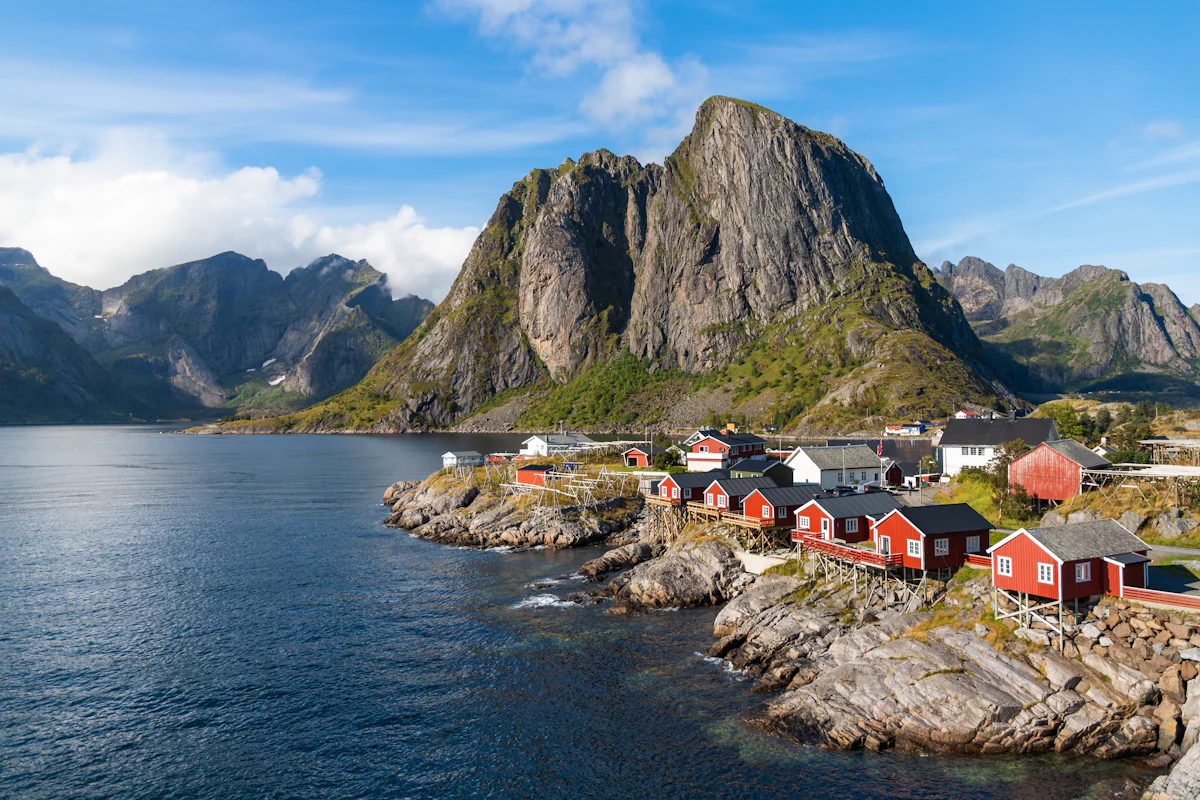
I still remember the exact moment I stopped my van on the E10 just past Flakstad, killed the engine, and just sat there with my mouth open. It was 11:40pm. The sun was sitting fat and orange on the horizon, refusing to set, painting a jagged wall of granite peaks and a turquoise bay in a colour I didn’t have a name for. Somewhere behind me a photographer I’d met at a rest stop was quietly swearing in German. That’s Lofoten. It does that to people.
I’m Imran, and I’ve been living out of a converted van for the better part of six years now, chasing everything from Saharan dust storms to Arctic ice roads. Of all the places I’ve parked up for a few nights, the Lofoten Islands in northern Norway remain the single destination I get asked about the most. This is the complete, no-fluff guide to doing it properly: where to fly or ferry in, whether you actually need a car (spoiler: yes, and here’s why), a full day-by-day route through the archipelago in the best sequence, where to eat, what to book in advance, and how to survive the cold-weather driving and van living side of things without turning your trip into a disaster movie.
This guide works whether you’re renting a car, driving your own van down from the mainland, or renting a campervan locally. I’ll flag the differences as we go.
Where Is Lofoten and Why Everyone Is Obsessed With It
The Lofoten archipelago sits above the Arctic Circle off the northwest coast of Norway, roughly at the same latitude as northern Alaska. It’s a chain of dramatic, almost impossibly steep granite peaks that rise straight out of the sea, strung together by a single main road (the E10) and a scattering of bridges, tunnels, and one glorious causeway. Fishing villages with red and ochre rorbuer (traditional fishermen’s cabins) cling to the rocky shoreline between white-sand beaches that look like they’ve been airlifted in from the Caribbean, except the water is about 8°C even in July.
What makes Lofoten special isn’t just the scenery, though the scenery alone would justify the trip. It’s the combination of factors: from late May to mid-July you get the midnight sun, meaning the sun genuinely does not set, which does strange and wonderful things to your body clock and to photography. In winter, the same islands become one of the most reliable places in Norway to see the aurora borealis, while the Gulf Stream keeps temperatures milder than you’d expect for the latitude. Add in world-class surfing at Unstad, some of the best hiking in Scandinavia, and a food scene built almost entirely around stockfish and fresh seafood, and you understand why photographers, van lifers, and hikers treat this place like a pilgrimage.
Getting There: Which Airport or Ferry to Arrive Via
There are three realistic ways to start your Lofoten trip, and which one you pick depends on whether you’re bringing your own vehicle.
Option 1: Fly into Harstad/Narvik Airport, Evenes (EVE)
This is the gateway most travellers use. Evenes Airport sits on the mainland, about a 90-minute drive from the southern tip of Lofoten at Å. Wideroe and SAS/Norwegian both run routes here from Oslo (OSL), Bergen (BGO), and Tromsø (TOS), and there are seasonal connections from further afield in Europe. You can check current routes and book directly through Avinor’s Evenes Airport page or compare fares on Norwegian Air and SAS. Evenes is by far the best option if you’re renting a car for the trip, since every major rental desk (Hertz, Avis, Europcar, Sixt) has a counter right in the terminal.
Option 2: Fly into Leknes Airport (LKN) or Svolvær Airport (SVJ)
If you want to start your itinerary from the middle of the archipelago rather than the mainland, both Leknes and Svolvær have small regional airports served by Widerøe with connections through Bodø. These are tiny airports with limited rental car availability, so book well ahead if you’re planning to pick up a car here. I’d only recommend this route if you’re doing a one-way itinerary and flying out of Evenes at the end, or vice versa, which is actually a smart way to avoid backtracking.
Option 3: The Ferry from Bodø to Moskenes
This is my favourite way in, and it’s the one I used with my van. If you’re driving up mainland Norway (or you’ve rented a car/camper in a city like Trondheim or Bodø), you can catch the car ferry from Bodø straight to Moskenes, at the southern end of Lofoten near Reine. The crossing takes around 3.5 to 4 hours and is operated by Torghatten Nord, bookable through the official Fjord1/Ferjer booking portal or aggregated on Rome2rio for route comparisons. In summer this ferry gets booked out days in advance, especially for vehicles, so reserve your spot the moment you know your dates. There’s also a passenger-only express boat if you’re arriving without a vehicle, though I really wouldn’t recommend doing Lofoten without wheels of some kind (more on that below).
My honest recommendation: fly into Evenes, pick up your rental car or camper there, and drive the E10 all the way down the archipelago to Å, then either backtrack or take the Moskenes-Bodø ferry out for a proper one-way adventure down the coast afterward.
Do You Need a Car? Yes. Here’s the Reasoning
I get this question constantly, and I’ll be blunt: you need your own wheels in Lofoten. Public transport exists (a regional bus network run by Reis Nordland connects the main towns), but the buses run infrequently, especially outside the June-August peak, and they simply don’t stop at half the viewpoints, beaches, and trailheads that make this trip worth doing. Lofoten’s magic is in the pull-offs, the five-minute detours down gravel tracks to a beach nobody else found, the ability to chase the midnight sun to whichever peak has the clearest sky that night. None of that works on a bus timetable.
A campervan or a small 4×4 rental is ideal. The E10 is a well-maintained, mostly two-lane road, but it narrows considerably around Reine and Å, includes several single-lane tunnels, and has sections with tight hairpins climbing over passes like the one near Torvdalshalsen. A car is completely fine for 90% of the trip. If you’re heading to trailheads like Ryten or Kvalvika in wetter months, a bit of extra ground clearance helps, but it’s not essential.
Cold-Weather and Shoulder-Season Driving Notes
Even in “summer,” Lofoten weather flips fast, and if you’re visiting in the shoulder seasons (April-May or September-October) or winter, you need to take driving seriously:
- Rental companies fit winter tyres automatically from around mid-October through Easter. If you’re renting outside that window but the forecast turns wintry, ask for winter tyres anyway; Norwegian rental agencies are used to this request and will usually accommodate it.
- Wind is the real hazard, not ice, for most of the year. The causeway sections and open stretches near Fredvang and Flakstad get brutal crosswinds that can genuinely push a high-sided van. Slow down, keep both hands on the wheel, and don’t be a hero.
- Tunnels: several are single-lane with passing bays or unlit older bores. Dip your headlights, watch your speed, and never assume you have right of way just because you can’t see oncoming traffic yet.
- Fuel up whenever you see a station below half a tank. Villages are spread thin and not every one has a fuel stop, especially the further out you get toward Å.
- Check Statens vegvesen’s road conditions site before setting out in winter; some minor roads and mountain passes get temporary closures.
Van Life in Lofoten: Where You Can Actually Park and Sleep
Norway’s “allemannsretten” (right to roam) gives you a lot of freedom to camp on uncultivated land, but Lofoten has become so popular that wild camping has been restricted or actively discouraged in many of the most scenic and fragile spots, particularly around the famous Instagram beaches. Please don’t park directly on beaches or in farmers’ fields; it’s not just bad etiquette, it actively damages an ecosystem that’s already under strain from tourism.
What I do, and what I’d recommend, is a mix of:
- Designated campsites with services, which are everywhere in Lofoten and generally excellent. Look at options through Camping.no or Visit Lofoten’s official accommodation listings.
- Legal free/low-cost rest areas along the E10, which are marked and generally tolerate one night of quiet, low-impact parking.
- Booking a rorbu (fisherman’s cabin) for a couple of nights partway through, both for a hot shower and to support the local economy that tourism actually funds.
Bring warm layers regardless of season. Even in July, nights above the Arctic Circle with a sea breeze can dip into single digits Celsius. A good sleeping bag rated well below what you think you need, a diesel or propane heater if your rig has one, and condensation control (crack a window, use moisture absorbers) will make a huge difference to how well you sleep.
The Full Lofoten Itinerary: Day by Day, Stop by Stop
This route assumes you’re arriving via Evenes and driving the E10 southwest, finishing near Å, which is genuinely the most satisfying way to experience Lofoten because the scenery escalates the whole way. Budget 6-8 days minimum; I’ve done it in 5 and regretted rushing every single day.
Day 1: Evenes to Svolvær via Harstad Bridge Route or the E10
Pick up your vehicle at Evenes and head toward Svolvær, Lofoten’s unofficial capital. It’s about a two-hour drive, and you’ll cross onto the archipelago proper via a series of bridges and the dramatic Raftsundet strait area if you take the coastal route. Svolvær itself is a good first stop for groceries (there’s a large Coop/Kiwi supermarket, stock up here since prices only get pricier and shops sparser further out), a SIM card if you need one, and your first proper meal.
- Eat at Bacalao Bar, a Svolvær institution built around the local obsession with dried cod.
- Hike the Fløya or Djevelporten trail directly above town for your first taste of Lofoten’s ridiculous vertical scenery. It’s steep but short, about 2-3 hours round trip.
- Stay the night at a campsite just outside town, such as Svolvær Sjøhuscamping, so you’re ready to move early.
Day 2: Svolvær to Henningsvær
Detour off the E10 toward Henningsvær, often called the “Venice of Lofoten,” a fishing village built across a cluster of small islands connected by bridges. This is a half-day stop, not a full day, but don’t rush it.
- Walk the harbour and the narrow lanes between the old fish-drying racks (called hjeller).
- Play a round at the famously scenic Henningsvær Golf Course, where several holes sit on their own tiny skerries surrounded by open sea. Even if you don’t golf, the clubhouse cafe has one of the best views in Norway.
- Hike Festvågtind for the classic aerial view down over Henningsvær’s islands, a photo you’ve almost certainly seen without knowing where it was taken. It’s a tough, steep scramble near the top, roughly 3-4 hours round trip, and not for anyone uneasy with exposure.
- Eat at Klatrekafeen, a climbers’ cafe with excellent home-style food and fresh cinnamon buns.
Book any guided climbing or via ferrata activities around here in advance through GetYourGuide’s Lofoten listings if you want a guided adventure day.
Day 3: Henningsvær to Reine via Kvalvika and Ryten
This is the day most people build their entire trip around, and rightly so. Backtrack to the E10 and continue southwest. Your first major stop is the trailhead near Fredvang for the Kvalvika Beach and Ryten hike.
- Park at the Torsfjorden trailhead (there’s a paid car park now due to overcrowding; bring cash or card).
- Hike up to Ryten’s summit for the postcard shot looking down onto Kvalvika Beach, a horseshoe of white sand tucked between cliffs. Round trip is around 4-5 hours at a relaxed pace.
- If you have energy and time, descend to the beach itself; it’s a legal wild camping spot for one night if you want to actually sleep there, but pack out everything you bring in.
Continue on to Reine in the late afternoon. If you only do one iconic viewpoint in all of Lofoten, make it Reinebringen, the near-vertical stone staircase (built by Nepalese Sherpa trail crews) that climbs directly above the village. The view from the top, down over Reine’s red rorbuer scattered across the fjord, is the single most photographed scene in Norway.
- Reinebringen: allow 2-3 hours round trip, steep stone steps the entire way, best attempted early morning or, in midnight sun season, genuinely at midnight when the light turns gold and the crowds vanish.
- Stay in a rorbu right in Reine for at least one night; it’s worth the splurge. Book through Reine Rorbuer or check availability on Booking.com’s Reine listings.
- Eat at Gammelfjøsstua or the harbour restaurant Eliassen Rorbuer’s dining room for the best fjord views with your fish soup.
Day 4: Reine, Å, and Moskenesøya’s Southern Tip
Spend the morning slowly working your way to the very end of the road. This stretch, from Reine through Hamnøy and down to Å, is the most photogenic drive I’ve done anywhere on earth, and it’s short, so take your time.
- Stop at Hamnøy first thing in the morning for the classic view back across the bridge toward the Reinebringen peaks; the light here at sunrise (or “midnight” in summer) is extraordinary.
- Continue to Å, the literal end of the E10 and one of the best-preserved traditional fishing villages in Norway. Walk the open-air Norwegian Fishing Village Museum grounds (Museum Nord’s Å i Lofoten page) and try the stockfish museum’s tastings if you’re curious about the industry that built this entire archipelago.
- Grab cinnamon buns at Å’s famous bakery, Anitas Sjømat, right on the harbour, known equally for fish cakes and baked goods.
- If the weather’s calm, book a RIB boat trip out to Moskstraumen, the famous maelstrom that inspired Edgar Allan Poe and Jules Verne, through operators like Lofoten Explorer or search current availability on Viator’s Lofoten tours.
Day 5: Beaches Day – Uttakleiv and Haukland
Backtrack north slightly for arguably the two most beautiful beaches in the archipelago, both easily reached by car and both worth a full day between them.
- Haukland Beach: a wide, white-sand bay with a short, family-friendly boardwalk trail on the northern headland for a viewpoint over the whole cove. There’s a decent cafe here for coffee and waffles.
- Uttakleiv Beach: just over the headland from Haukland, wilder and rockier, famous for its sea stacks and for being one of the best spots on the islands to watch the midnight sun actually touch the horizon, weather permitting. In winter this is also a prime aurora-watching spot due to minimal light pollution.
- If you surf, or want to try, detour to Unstad Beach, Norway’s Arctic surf capital. Unstad Arctic Surf rents wetsuits and boards and runs lessons even for total beginners; surfing above the Arctic Circle in a 6mm wetsuit is one of those bizarre, brilliant things you can only do here.
Day 6: Nusfjord and Flakstad, or a Rest and Explore Day
By now you’ve earned a slower day. Nusfjord is a beautifully preserved, UNESCO-recognised historic fishing village a short detour off the E10, small enough to explore properly in two or three hours, with a lovely little cafe on the wharf. Flakstad’s black-timbered onion-domed church nearby is a quirky, worthwhile five-minute stop, unusual in its Russian-influenced architecture.
This is also a good day to do laundry, refill water and propane, and just sit somewhere with a coffee and stare at mountains for a while. Van life burns you out fast if you treat every day like a checklist; Lofoten rewards slowness.
Day 7: Back Toward Svolvær or Onward via Ferry
If you flew into Evenes, retrace the E10 back north, stopping wherever you missed something or the light looks better than it did the first time (it often does). If you’re doing the one-way route, this is the day to catch the ferry from Moskenes back to Bodø, ideally booked weeks in advance in peak season through the official ferry booking site.
Best Time to Visit for Midnight Sun
The midnight sun is visible above the Arctic Circle from roughly late May through mid-July in Lofoten, with the true peak (sun never dipping below the horizon at all) running from around May 26 to July 17. I’d target mid-June to early July for the sweet spot: warmest temperatures, driest weather on average, and the sun still tracing a full circle around the sky. Late June also coincides with Sankthansaften (St. Hans Eve, Norway’s midsummer celebration) on June 23, when you’ll find bonfires and local festivities in villages along the coast.
If aurora hunting is more your thing, flip the calendar entirely and come between late September and late March, ideally around the new moon for darker skies. Just know that winter Lofoten driving requires real preparation; see the cold-weather notes above and take them seriously.
Packing and Practical Notes for the Van Life Crowd
- Bring a proper eye mask. Midnight sun sounds romantic until you’re trying to sleep at 2am in what looks like 4pm daylight.
- Cash is basically obsolete in Norway; every cafe, museum, and parking meter takes card or Vipps, but keep a little cash for the rare exception, particularly at unmanned honesty-box parking areas.
- Fresh water fill-up points and dump stations are marked on apps like Park4Night, which I’d consider essential for any van trip through Norway generally, not just Lofoten.
- Norway is expensive. Groceries from Kiwi, Rema 1000, or Coop are your budget lifeline; eating out every meal will wreck your budget fast.
- Midges and mosquitoes can be fierce near still water and wetlands in July; pack repellent.
What a Realistic Daily Budget Looks Like
People always ask me how much Lofoten actually costs, because Norway’s reputation for being expensive is well earned and it can scare van lifers off before they even look at flights. Here’s what I actually spend, broken down honestly, assuming two people sharing a rented campervan.
- Campsite pitch with power and water: roughly 350-450 NOK per night, which is around 30-40 USD. Some basic rest areas and honesty-box parking spots run half that.
- Groceries: budget 500-700 NOK per day for two people cooking most meals in the van. Coop and Kiwi own-brand products keep this manageable; imported snacks and anything in a cafe fridge will not.
- Fuel: diesel typically runs 18-22 NOK per litre depending on the week. A week of driving the full length of the archipelago and back usually costs somewhere around 1200-1800 NOK in fuel for a mid-size camper.
- One rorbu night as a splurge: anywhere from 1500 NOK for a basic cabin to 3500+ NOK for a well-appointed one right on the water in Reine or Hamnøy.
- Activities: a guided RIB tour to Moskstraumen or a fjord safari typically runs 900-1400 NOK per person; a surf lesson at Unstad is around 1200-1500 NOK including gear.
All told, a frugal but comfortable week for two people, including one splurge night, tends to land somewhere around 12,000-16,000 NOK total, not counting flights or the ferry. It’s not cheap, but it’s also far more manageable than most people assume once you’re cooking your own meals and free camping or using basic rest areas a few nights a week.
Photography Tips for Chasing the Midnight Sun
I’m not a professional photographer, but I’ve spent enough sleepless nights with a tripod on Lofoten’s beaches to have picked up a few things worth passing on.
- The “golden hour” during midnight sun season isn’t at sunrise or sunset in the traditional sense, because the sun never actually sets. Instead, you get a long, slow golden light that runs from around 10pm through roughly 2am as the sun skims low along the horizon. This is when Reinebringen, Hamnøy, and Uttakleiv all look their absolute best, and it’s also when the crowds thin out because most tourists are asleep.
- Bring a sturdy tripod. Coastal Lofoten is windy even on calm days, and a flimsy travel tripod will give you blurry long exposures.
- A polarising filter cuts glare off the water dramatically, especially useful at Haukland and Kvalvika where the turquoise shallows are half the appeal of the shot.
- Charge everything obsessively. Cold nights drain batteries faster than you’d expect, even in summer, and if you’re relying on solar in the van, the extended daylight actually works in your favour for keeping panels topped up.
- Don’t just chase the famous angles. Some of my favourite shots from Lofoten are from random pull-offs on the E10 between Vareid and Ramberg that I’ve never seen another photo of.
Mistakes I Made So You Don’t Have To
On my first Lofoten trip I tried to do the whole archipelago in four days because I was still on mainland-Norway pacing, treating it like a normal road trip. It was a mistake. I missed the ferry booking window for Moskenes-Bodø and had to backtrack the entire E10 in one long, exhausting push, which meant I drove straight past Nusfjord and Flakstad’s church without stopping because I was watching the clock instead of the scenery.
The second mistake was underestimating how quickly weather changes. I set out for Ryten on what looked like a clear morning and got caught in horizontal rain and near-zero visibility by the time I reached the ridge. Always check the short-range forecast on Yr.no, Norway’s excellent hyper-local weather service, right before setting out on any exposed hike, not the night before.
The third, smaller mistake: not booking the Reine rorbu far enough ahead. Peak season (July especially) sells out the good waterfront cabins months in advance. If a specific place, like Eliassen Rorbuer or Reine Rorbuer, is on your must-do list, book it as soon as your flights are confirmed, not when you land.
Don’t Skip the Trollfjord and a Sea Eagle Safari
If you have even one spare afternoon around Svolvær, I’d push the eagle safari and Trollfjord boat trip above almost everything else on this list except Reinebringen. Trollfjord is a narrow, sheer-walled fjord branching off the Raftsundet strait, famous for a dramatic 1890 fishing boat standoff and for being so tight that larger boats have to reverse out rather than turn around inside it. The approach alone, between thousand-metre cliffs that seem to close in on the boat, is worth the ticket price.
Most operators combine the Trollfjord run with a white-tailed sea eagle feeding stop along the way, and watching one of Europe’s largest raptors, with a wingspan over two metres, drop out of the cliffs to snatch fish from the water beside your boat is genuinely one of the best wildlife moments I’ve had anywhere. Book through Lofoten Explorer or check combined Trollfjord-eagle safari options on GetYourGuide; RIB boats run faster and give you a more thrilling, spray-in-your-face ride, while the larger cabin boats are calmer and better if you’re prone to seasickness or travelling with young kids.
My Van Life Gear List for an Arctic Norway Trip
People setting off on their first cold-climate van trip always want the actual packing list, not vague advice, so here’s what lives in my van whenever I’m heading above the Arctic Circle.
- A four-season sleeping bag rated to at least -5°C, even for a “summer” trip, because sea breezes above the Arctic Circle don’t care what the calendar says.
- A diesel night heater or a well-ventilated propane heater with a carbon monoxide detector. Non-negotiable for shoulder season and winter trips; I never run mine without the detector on and a window cracked.
- Wool base layers, a proper waterproof shell, and a warm hat, even in July. I’ve worn all three on a “summer” hike up Ryten in driving sideways rain.
- Good hiking boots with ankle support for the steeper trails like Reinebringen, Festvågtind, and Ryten, all of which involve loose scree and exposed rock.
- A 20-litre fresh water container and a grey water container, since not every rest stop has fill points, and Norway is strict about not dumping grey water on the ground.
- A compact drying rack or line, because in a maritime climate you will get wet gear constantly and van interiors don’t dry things quickly without airflow.
- An offline map app (I use Maps.me alongside the paper Lofoten hiking map from the tourist office in Svolvær) since mobile signal genuinely drops out in some of the more remote fjord stretches.
- A 12V or solar setup robust enough to run a fridge continuously; with 24-hour daylight in June, solar performs brilliantly here if you’ve got decent panel coverage on the roof.
Connecting Lofoten to the Rest of a Norway Road Trip
If you’re not flying straight in and out, Lofoten fits beautifully into a longer Norwegian road trip, and I’d encourage you to build in the extra days if your schedule allows. From Bodø, where the Moskenes ferry lands, you can continue south along the E6 and coastal Fv17 through Helgeland, one of the most underrated coastal drives in the country, eventually connecting toward Trondheim. Heading north from Evenes instead, you’re a short hop from Narvik (with its dramatic wartime history and the Ofoten railway) and onward to Tromsø, which happens to be the subject of another guide on this blog if you want to keep the Arctic momentum going.
Vesterålen, the archipelago immediately north of Lofoten and connected by the same E10 corridor, is also worth at least a two or three day detour if you have the time. It’s quieter, wilder in places, and home to whale-watching trips out of Andenes that rival anything you’ll find further south. I’ve folded a Vesterålen loop into a Lofoten trip twice now and never regretted the extra days.
Frequently Asked Questions About Visiting Lofoten
Is Lofoten worth visiting outside the summer season?
Absolutely, and in some ways I prefer it. Late September through March trades the midnight sun for genuine darkness, dramatically better odds of seeing the northern lights, and a much quieter archipelago with far fewer tour buses at Reinebringen and Henningsvær. The trade-off is shorter days, colder temperatures, and driving conditions that demand more caution, as covered in the cold-weather driving section above.
How many days do you actually need?
Five days is a workable minimum if you’re efficient and lucky with weather. Seven to ten days lets you slow down, wait out bad weather for a hike, and actually enjoy villages like Nusfjord and Henningsvær rather than just photographing them from the car window.
Can you do Lofoten without a rental car if you’re not driving your own van?
Technically yes, using the Reis Nordland bus network and organised day tours from Svolvær, but I’d only recommend this if you’re extremely short on time or budget, and even then you’ll miss most of what makes the archipelago special. The beaches, trailheads, and quiet viewpoints that define Lofoten are almost all reachable only by private vehicle.
Is Lofoten family-friendly for a road trip?
Yes, particularly the beach days at Haukland and Uttakleiv, the museum at Å, and gentler walks around Henningsvær’s harbour. Save the steeper hikes like Reinebringen and Ryten for older kids or split the group so someone can supervise younger ones at a cafe or beach while others hike.
What should I book before I arrive, and what can wait?
Book your flights or the Moskenes-Bodø ferry crossing (with a vehicle) as early as possible, since both sell out in peak summer weeks. Also lock in your campervan or car rental early, since availability at Evenes tightens up considerably in July. On the other hand, most hikes, beach days, and casual meals don’t need advance booking at all; I’d hold off on locking in a rigid day-by-day schedule for anything weather-dependent, like Reinebringen or the Trollfjord boat trip, until you can see a short-range forecast on Yr.no and pick your best window.
Is it safe to drive a campervan solo through Lofoten?
Yes, and I’ve done it alone more than once. The E10 is well-signed and well-maintained, fuel stations and campsites are frequent enough that you’re rarely more than 30-40 minutes from help, and Norwegians are generally quick to stop and assist a stranded traveller. The main things to respect solo are the wind on exposed causeway sections, fatigue from the endless daylight tricking you into driving later than you should, and always telling someone (a campsite host, a fellow traveller, or family back home) roughly where you’re headed if you’re setting off on a more remote hike alone.
Final Thoughts From the Driver’s Seat
Lofoten isn’t a place you tick off. It’s a place that rearranges your sense of scale, colour, and time, especially if you catch it under a sun that simply won’t set. I’ve done this drive three times now, in three different seasons, and I still pull over at Hamnøy every single trip and just sit there for twenty minutes doing nothing but looking. Give yourself more time than you think you need, book your ferry and your rorbu nights ahead of the peak season crush, respect the fragile coastline you’re driving through, and let the islands set the pace. They will, whether you plan for it or not.
If there’s one piece of advice I’d leave you with above all the logistics, it’s this: build slack into your schedule. The itinerary above works as a sequence, but Lofoten weather has a habit of rewriting your plans, and some of my best memories here came from days I’d originally planned to spend somewhere else entirely, redirected by a clear sky, a tip from a local fisherman, or simply a road I hadn’t noticed on the map. Bring layers, bring patience, and bring a full memory card. You’re going to need all three.
n
Photo by Benoxc3xaet Deschasaux on Unsplash.